There’s a certain magic to a perfectly made crepe – that delicate, paper-thin canvas, lightly golden and ready to embrace any filling, sweet or savory. While a quality crepe maker or pan is essential, the true artistry often lies in the hands of the chef and the tools they wield. Achieving those coveted restaurant-quality crepes hinges on having the right spreader tools and spatulas. These often-overlooked utensils are the unsung heroes, ensuring your batter is flawlessly even and your crepes are flipped with effortless grace. Without them, you might find yourself battling uneven thickness, torn edges, and less-than-perfect results. This comprehensive guide will help you navigate the world of crepe tools, ensuring you select the ideal companions for your crepe-making adventures.
The Essential Duo: Crepe Spreader Tools and Spatulas
To consistently craft exquisite crepes, you need two primary tools: a crepe spreader and a crepe spatula. Each plays a distinct role in transforming liquid batter into a culinary delight.
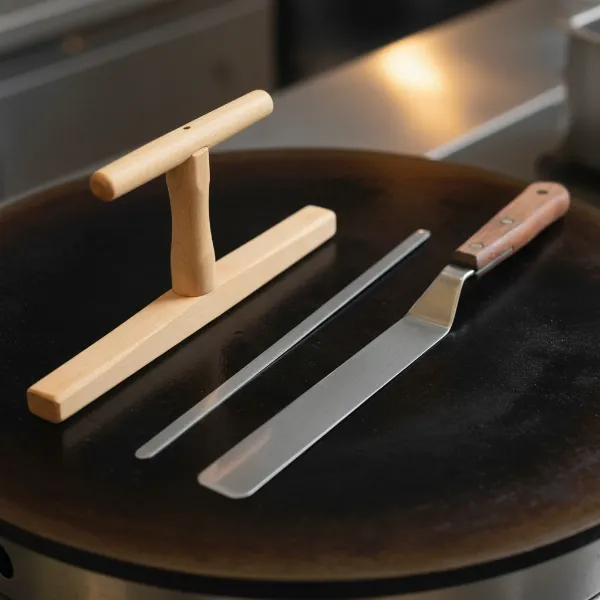 Close-up of a wooden crepe spreader and a thin metal crepe spatula on a professional griddle
Crepe Spreaders (The Rozell)
The crepe spreader, traditionally known as a “rozell” in French, is the key to achieving that signature thin and even crepe. It’s designed to quickly and smoothly distribute batter across the hot cooking surface.
- T-Bar / Flat Spreaders: These are the classic, T-shaped tools often seen in professional crepe stands. Typically made from boxwood or beech, they allow for exceptionally thin crepes once mastered. However, beginners might find them challenging, as they require a precise touch to avoid holes or thick spots. The flat edge demands careful pressure control.
- Round Spreaders: Recommended for those new to crepe making, round spreaders, while still T-shaped, feature a rounded spreading bar. Their design helps apply more consistent, even pressure to the batter, making the spreading motion more forgiving. These can be found in wood, stainless steel, or even silicone.
|
Our Picks for the Best Crepe maker in 2026
As an Amazon Associate I earn from qualifying purchases.
|
||
| Num | Product | Action |
|---|---|---|
| 1 | Moss & Stone Electric Crepe Maker 8 Inch, Portable Crepe Maker & Hot Plate Cooktop On/Off Switch, Nonstick Coating, Automatic Temperature Control, Easy To Use For Pancakes, Blintz, Chapati |

|
| 2 | Gourmia 8” Electric Crepe Maker – Nonstick Ceramic Surface, One-Touch Operation, Includes Batter Tray, Compact & Easy to Clean, Crepe, Pancake & Tortilla Maker |
|
| 3 | Nutrichef Electric Crepe Maker - 8-inch Nonstick Cooktop with On/Off Switch - Cooks Roti, Tortillas & Pancakes - Automatic Temperature Control & Cool Touch Handle - Includes Food Bowl, Whisk & Spatula |
|
| 4 | 16 Inch Commercial Crepe Maker, Dual-Head, Dual Zone Temp Setting, Nonstick Pancake Griddle Machine, 50-300°C(120-570℉), 3400W, S.S. Shell, for Catering, Restaurant, Snack Stand, CE Certified |
|
| 5 | Moss & Stone 12” Electric Griddle Pan & Crepe Machine, Non-Stick Electric Crepe Maker with Adjustable Temperature, Includes Spreader & Spatula – Ideal for Pancakes, Blintzes & Tortillas |
|
| 6 | Electric Crepe Maker 12'' & Griddle - Non-Stick Pan With Spreader for Roti, Tortilla, Blintzes, Pancakes - Adjustable Temperature, 1000W |
|
| 7 | Baker's Friend Instant Crepe Maker with Handle, Electric Crepe Maker Machine, Crepera Electrica, 8 Inch Non-stick Cooking Surface, Aqua |
|
| 8 | Gourmia 12” Crepe Maker – Nonstick Electric Griddle for Pancakes, Omelets & More, Precise Temp Control with Indicator Lights, Includes Spatula & Batter Spreader, Quick Cleanup, Stainless Steel Trim |
|
| 9 | Moss & Stone Electric Crepe Maker – 8” Portable Crepe Pan Nonstick with Dipping Plate, Auto Shut-Off, On/Off Switch, Even Heating & One Automatic Temperature Control – Compact Crepe Maker |
|
| 10 | Nutrichef Electric Crepe Maker & Griddle Cooktop - Nonstick 12 Inch Aluminum Hot Plate with LED Indicator Lights & Adjustable Temperature Control - Wooden Spatula & Batter Spreader Included |
|
The size of your spreader should always correspond to the diameter of your crepe maker or pan. For example, an 18 cm spreader is ideal for a 35 cm crepe maker, while larger griddles (40 cm or 48 cm) benefit from spreaders ranging from 18 to 22 cm, allowing you to reach all edges with ease.
Crepe Spatulas (The Turner)
Once your batter is perfectly spread and cooking, the crepe spatula steps in. This tool is specifically designed to gently lift, loosen, and flip your delicate crepes without tearing them. Unlike standard kitchen spatulas, crepe spatulas typically feature a thin, wide, and often flexible blade that can slide easily under the crepe’s delicate edges.
Choosing Your Material: Wood, Stainless Steel, or Synthetics?
The material of your crepe tools significantly impacts their performance, durability, and compatibility with your cooking surface. Each option presents unique advantages and disadvantages.
Wooden Crepe Spreaders & Spatulas
Wooden tools are often the preferred choice for traditionalists and those using non-stick surfaces.
- Pros: Wood is notably gentle on non-stick coatings, preventing scratches and preserving the life of your crepe pan. They are generally affordable and offer a natural feel in hand. For spreaders, wood’s natural thermal properties can even aid in maintaining an even temperature across the batter as it spreads.
- Cons: Wooden tools are not dishwasher safe and require careful hand washing to prevent warping, cracking, or splintering. Batter can sometimes stick to the porous surface if not properly maintained, and over time, wooden tools will need to be replaced due to wear or damage from moisture.
Stainless Steel Crepe Spreaders & Spatulas
For durability and hygiene, stainless steel is a strong contender, particularly in commercial settings.
- Pros: Stainless steel tools are exceptionally durable, long-lasting, and virtually indestructible. They are typically dishwasher safe, making cleanup effortless and hygienic. The smooth surface of stainless steel spreaders can also help prevent batter from sticking, ensuring a clean sweep.
- Cons: The primary drawback of stainless steel is its potential to scratch or damage non-stick surfaces if not used with extreme care. They are generally more expensive than their wooden or plastic counterparts. Therefore, stainless steel is best suited for cast iron or heavily seasoned surfaces.
Plastic, Nylon & Silicone Crepe Spreaders & Spatulas
Modern kitchenware offers synthetic alternatives that bring their own set of benefits.
- Pros: These materials are excellent for non-stick pans, as they are gentle and won’t cause scratches. They are often lightweight and inexpensive, providing a budget-friendly option. Nylon spreaders offer more durability than wood, while silicone spatulas are often dishwasher safe and have a good heat resistance.
- Cons: Plastic tools may be less durable than stainless steel options, and some users find that silicone spreaders can feel too “slippery,” lacking the precise control that wood offers for batter distribution. Always check the heat resistance for silicone products to ensure they are suitable for hot crepe surfaces.
Comparing Crepe Spreader Tools and Spatulas: A Quick Look
To help you decide, here’s a comparison of the most common materials for crepe tools:
| Material | Durability | Non-Stick Safety | Ease of Cleaning | Cost | Best Use Case |
|---|---|---|---|---|---|
| Wood | Moderate (can warp) | Excellent | Hand wash only | Low-Moderate | Traditional, non-stick, delicate touch |
| Stainless Steel | Excellent | Poor (scratches) | Dishwasher safe | Moderate-High | Cast iron, commercial, heavy-duty |
| Plastic/Nylon | Moderate | Excellent | Dishwasher safe | Low | Non-stick, budget-friendly, home use |
| Silicone | Moderate | Excellent | Dishwasher safe | Moderate | Non-stick, versatile spatula, good flexibility |
Mastering the Art: Tips for Using Your Crepe Tools
Having the right tools is only half the battle; knowing how to use them is where the magic truly happens.
Preparing Your Tools
Before you even touch the batter, ensure your crepe maker or pan is properly preheated and seasoned, creating a non-stick surface. For wooden spreaders, it’s a good practice to keep them slightly damp in a shallow water tray between each crepe. This prevents batter from sticking to the spreader and allows for a smoother, cleaner glide.
Spreading Technique with a Rozell
The spreading motion is fluid and quick. First, pour a measured amount of batter into the center of your hot pan. Immediately place your T-bar or round spreader lightly onto the puddle of batter, with a slight forward tilt. With gentle, consistent pressure, swiftly move the spreader outwards in a circular or spiral motion, covering the entire surface of the pan. The goal is to create an even, paper-thin layer before the batter sets. Once the batter has reached the edges, gently lift the spreader straight up from where you began to avoid leaving a mark.
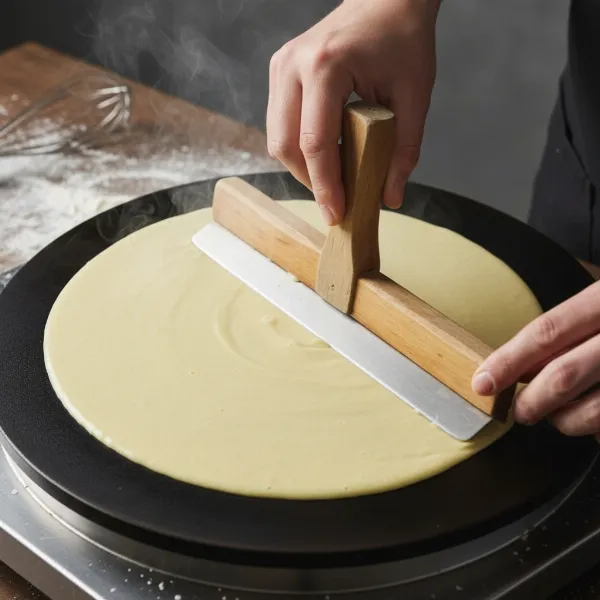 Chef spreading crepe batter with a wooden T-bar spreader on a hot griddle
Common Mistakes to Avoid When Spreading:
- Too Much Pressure: Pressing down too hard can tear the delicate crepe or create uneven thin spots. Remember, the goal is to guide the batter, not scrape the pan.
- Wrong Timing: Crepe batter cooks quickly. If you wait too long after pouring, the batter will start to set, making it impossible to spread thinly and evenly. Speed and confidence are your allies.
- Dirty Spreader: As mentioned, batter can clump on a dry or uncleaned spreader, leading to holes or uneven textures in your crepe. Rinse your spreader in a water bath between each use.
Flipping Technique with a Spatula
Once your crepe is cooked on one side, it’s time to flip. Wait until the surface appears set and the edges begin to lift naturally from the pan. Slide your thin, wide crepe spatula carefully under one edge, then gently lift and swiftly flip the crepe over to cook the other side for just a short moment. Practice makes perfect, and soon you’ll be flipping like a pro.
Matching Tools to Your Crepe Maker
The type of crepe maker you use should influence your tool choice:
- Non-stick Surfaces: Always opt for wooden, plastic, nylon, or silicone spreaders and spatulas to protect the coating and extend your pan’s life.
- Cast Iron or Traditional Steel: These durable surfaces can handle wooden or stainless steel tools, allowing for more flexibility in your selection.
Maintaining Your Crepe Tools for Longevity
Proper care extends the life of your crepe tools and ensures they perform at their best.
- Wooden Tools: Hand wash with mild soap and warm water immediately after use. Avoid soaking them, as this can lead to warping, cracking, or mold growth. Dry thoroughly with a cloth and allow them to air dry completely before storing in a dry place. Replace warped or splintered wooden tools.
- Stainless Steel, Plastic, Nylon, and Silicone Tools: Most of these materials are dishwasher safe, offering convenient cleanup. Always check manufacturer guidelines for specific care instructions, especially for heat-resistant ratings. For spreaders, a quick rinse in a water tray between each crepe is crucial, regardless of material, to prevent batter buildup.
Conclusion
Creating perfect crepes is an art, and like any artist, you need the right tools. From the gentle glide of a wooden spreader shaping your batter to the swift, clean flip of a flexible spatula, each utensil plays a vital role in achieving that sought-after delicate texture and golden hue. Whether you prefer the traditional touch of wood, the robust durability of stainless steel, or the modern versatility of synthetics, understanding the nuances of each material will empower you to make informed choices. Embrace the process, experiment with different tools, and soon you’ll be effortlessly crafting crepes that delight both the eye and the palate.
What are your favorite crepe-making tools, and what secrets have you uncovered in your quest for the perfect crepe?
Frequently Asked Questions
What is a “rozell” and why is it used?
A “rozell” is the French term for a crepe spreader, typically a T-shaped stick used to distribute crepe batter thinly and evenly across a hot griddle. It’s essential for achieving the uniform, delicate texture characteristic of traditional crepes.
Can I use a metal spreader on a non-stick pan?
It is generally not recommended to use a metal spreader on a non-stick pan as it can scratch or damage the non-stick coating over time. For non-stick surfaces, wooden, plastic, nylon, or silicone spreaders are much safer choices.
How do I clean wooden crepe tools?
Wooden crepe tools should be hand washed immediately after use with mild soap and warm water. Avoid soaking them, and dry them thoroughly before storing in a dry place. This prevents warping and extends their lifespan.
What size spreader do I need for my crepe maker?
The ideal spreader size should correspond to your crepe maker’s diameter. For instance, a 18 cm spreader works well for a 35 cm crepe maker, while larger griddles (40-48 cm) benefit from spreaders between 18-22 cm to ensure full coverage.
Is a round or flat spreader better for beginners?
A round spreader is generally recommended for beginners. Its design helps apply more consistent pressure, making it easier to spread batter evenly without creating holes or thick spots. Flat spreaders require more dexterity and are typically preferred by experienced crepe makers.