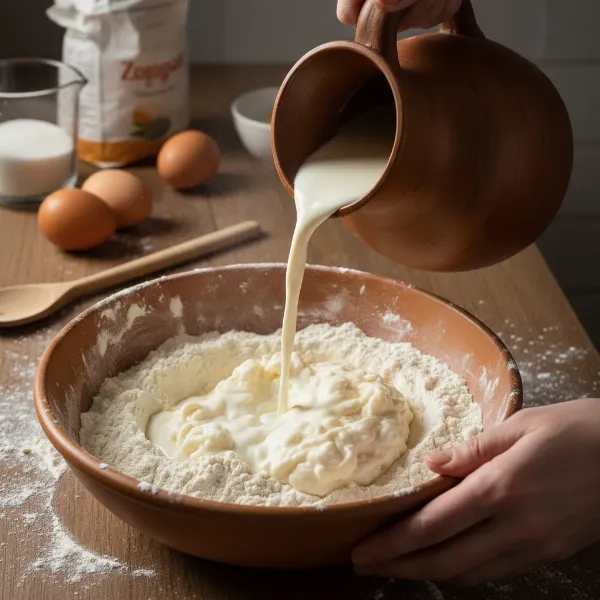
For over a decade, my hands-on experience with crepe makers, from compact home models to robust professional griddles, has taught me one undeniable truth: the secret to consistently perfect crepes often lies not just in the batter, but in the seemingly simple act of greasing your crepe maker. As the Admin of CrepeMakerDepot.com, I’ve seen countless chefs and home cooks grapple with sticking, uneven browning, or off-flavors, all stemming from using the wrong type of oil. Choosing the ideal oil for your crepe maker is a foundational step that ensures every crepe slides effortlessly, boasts a beautiful golden hue, and tastes exactly as intended, without any unwelcome surprises from your cooking surface. This comprehensive guide will arm you with the knowledge to select the perfect greasing agent, transforming your crepe-making experience from frustrating to flawless.
Why the Right Oil Matters for Your Crepe Maker
You might think oil is just oil, but when it comes to the delicate art of crepe making, your choice of lubricant plays a pivotal role. The right oil isn’t just about preventing stickage; it’s about achieving culinary excellence.
Firstly, effective greasing creates a superior non-stick surface. This is fundamental for crepes, which are notoriously thin and prone to tearing if they cling to the griddle. A properly oiled surface allows the crepe to spread evenly, cook consistently, and release cleanly with minimal effort, preserving its delicate structure.
Secondly, the correct oil contributes to even browning and a beautiful texture. Oil acts as a heat conductor, distributing warmth across the cooking surface and ensuring your crepes develop that coveted golden-brown lace without burnt spots. It also influences the final texture, providing a slight crispness on the exterior while keeping the interior tender.
Beyond performance, the oil you choose also impacts flavor preservation. Many oils have distinct flavors that can subtly (or not-so-subtly) transfer to your crepes. Using a neutral-flavored oil ensures that the delicate taste of your crepe batter and fillings takes center stage, exactly as it should.
Finally, for crepe makers with cast iron or carbon steel surfaces, the right oil is indispensable for seasoning and protection. Seasoning creates a natural, durable non-stick layer through a process called polymerization, where oil bakes onto the metal. This not only enhances non-stick properties but also protects the metal from rust and wear, extending the life of your prized appliance.
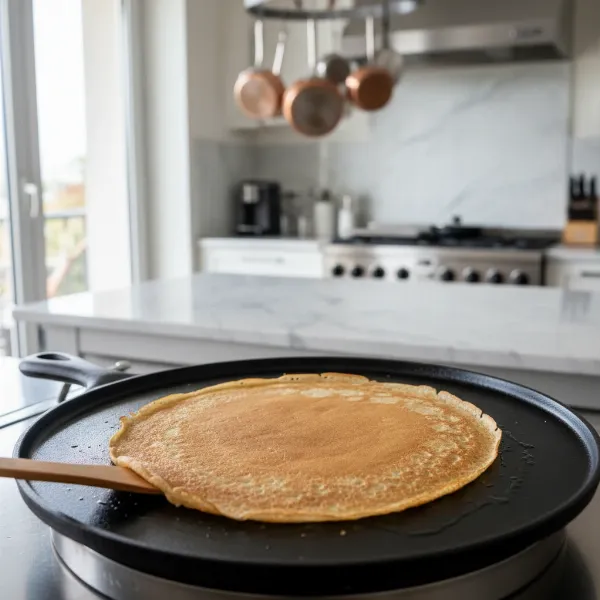 Perfectly golden-brown crepe sliding off a non-stick griddle, highlighting the importance of oil.
Understanding Oil Properties for Crepe Making
To make an informed decision, it’s essential to understand a few key characteristics that differentiate cooking oils. These properties directly influence how an oil performs under the high heat required for crepe making.
The most critical factor is an oil’s smoke point. This is the temperature at which an oil begins to burn and produce smoke. When an oil reaches its smoke point, it breaks down, releasing free radicals and imparting a burnt, bitter flavor to your food. Since crepe makers operate at relatively high temperatures to achieve quick cooking and browning, choosing an oil with a high smoke point is paramount. This prevents scorching, ensures a clean flavor, and maintains the integrity of your cooking surface.
Next is the flavor profile of the oil. Some oils, like extra virgin olive oil or unrefined coconut oil, have pronounced flavors that can be delicious in certain dishes but might clash with the subtle taste of a crepe. For versatility and to let your crepe’s ingredients shine, a neutral-flavored oil is often preferred.
Finally, consider the type of fat in the oil. While less critical for crepe making than smoke point, understanding if an oil is primarily monounsaturated, polyunsaturated, or saturated can give you insights into its stability and how it might perform. For instance, highly polyunsaturated oils can be more prone to oxidation at very high temperatures, though this is less of a concern for the relatively short cooking times of crepes.
Top Recommended Oils for Crepe Maker Greasing
Having repaired and used countless crepe makers, I’ve seen firsthand which oils consistently deliver the best results. Here are my top recommendations, categorized by their primary advantages.
High Smoke Point, Neutral Flavor Oils
These oils are workhorses in any crepe kitchen, offering excellent non-stick properties without interfering with taste.
- Canola Oil: This is a fantastic all-around choice. Canola oil boasts a high smoke point (around 400°F / 204°C) and a very neutral flavor, making it suitable for both sweet and savory crepes. It’s also widely available and cost-effective, making it a staple for many crepe enthusiasts. Its light texture spreads easily, ensuring a thin, even layer.
- Grapeseed Oil: If you’re looking for a step up in performance, grapeseed oil is an excellent option. With a smoke point nearing 420°F (216°C), it can withstand the heat of professional crepe makers. Like canola, it has a very clean, neutral taste that won’t compete with your crepe fillings. It’s often favored for its smooth texture and ability to create a consistent non-stick surface.
- Sunflower Oil: Especially recommended for the initial seasoning process on traditional cast iron or carbon steel griddles, sunflower oil has a high smoke point (around 450°F / 232°C). Its neutral flavor and stability under high heat make it ideal for both seasoning and daily greasing. It helps build a robust, durable non-stick layer that improves with use.
- Avocado Oil: For those prioritizing health benefits and maximum heat tolerance, avocado oil is a premium choice. It has one of the highest smoke points among cooking oils, often exceeding 500°F (260°C). Its mild, buttery flavor is almost imperceptible in crepes, making it incredibly versatile. The main drawback is its higher price point, but a little goes a long way.
|
Our Picks for the Best Crepe maker in 2026
As an Amazon Associate I earn from qualifying purchases.
|
||
| Num | Product | Action |
|---|---|---|
| 1 | 16 Inch Commercial Crepe Maker, Dual-Head, Dual Zone Temp Setting, Nonstick Pancake Griddle Machine, 50-300°C(120-570℉), 3400W, S.S. Shell, for Catering, Restaurant, Snack Stand, CE Certified |

|
| 2 | Gourmia 8” Electric Crepe Maker – Nonstick Ceramic Surface, One-Touch Operation, Includes Batter Tray, Compact & Easy to Clean, Crepe, Pancake & Tortilla Maker |
|
| 3 | Gourmia 12” Crepe Maker – Nonstick Electric Griddle for Pancakes, Omelets & More, Precise Temp Control with Indicator Lights, Includes Spatula & Batter Spreader, Quick Cleanup, Stainless Steel Trim |
|
| 4 | Moss & Stone Electric Crepe Maker 8 Inch, Portable Crepe Maker & Hot Plate Cooktop On/Off Switch, Nonstick Coating, Automatic Temperature Control, Easy To Use For Pancakes, Blintz, Chapati |
|
| 5 | Moss & Stone 12” Electric Griddle Pan & Crepe Machine, Non-Stick Electric Crepe Maker with Adjustable Temperature, Includes Spreader & Spatula – Ideal for Pancakes, Blintzes & Tortillas |
|
| 6 | Nutrichef Electric Crepe Maker - 8-inch Nonstick Cooktop with On/Off Switch - Cooks Roti, Tortillas & Pancakes - Automatic Temperature Control & Cool Touch Handle - Includes Food Bowl, Whisk & Spatula |
|
| 7 | Nutrichef Electric Crepe Maker & Griddle Cooktop - Nonstick 12 Inch Aluminum Hot Plate with LED Indicator Lights & Adjustable Temperature Control - Wooden Spatula & Batter Spreader Included |
|
| 8 | Baker's Friend Instant Crepe Maker with Handle, Electric Crepe Maker Machine, Crepera Electrica, 8 Inch Non-stick Cooking Surface, Aqua |
|
| 9 | Moss & Stone Electric Crepe Maker – 8” Portable Crepe Pan Nonstick with Dipping Plate, Auto Shut-Off, On/Off Switch, Even Heating & One Automatic Temperature Control – Compact Crepe Maker |
|
| 10 | Electric Crepe Maker 12'' & Griddle - Non-Stick Pan With Spreader for Roti, Tortilla, Blintzes, Pancakes - Adjustable Temperature, 1000W |
|
For Flavor & Specific Applications
Sometimes, a touch of specific flavor can enhance your crepes, or you might have a particular cooking style in mind.
- Clarified Butter (Ghee): If you crave that classic buttery richness without the risk of burnt milk solids, clarified butter, or ghee, is an excellent choice. Regular butter has a low smoke point due to its milk solids, which burn quickly and leave a residue. Ghee, with its milk solids removed, has a higher smoke point (around 485°F / 252°C) and imparts a wonderful, nutty flavor that complements many sweet crepes beautifully. It’s also great for savory crepes where a buttery note is desired.
- Vegetable Oil Blends: Many generic “vegetable oil” products are blends of various neutral oils like soybean, corn, and sunflower oil. These are often quite cost-effective and have reasonably high smoke points, making them a practical choice for everyday crepe making. Always check the ingredients if you have specific preferences, but generally, these blends perform well for greasing.
- Refined Coconut Oil: While unrefined coconut oil has a distinct tropical aroma and flavor, refined coconut oil is much more neutral. Both types have a relatively high smoke point (around 350-400°F / 177-204°C for refined). Refined coconut oil can be excellent for sweet crepes, adding a subtle richness without an overwhelming coconut taste. It also works well for seasoning, particularly if you prefer a solid fat that can be easily melted and spread. However, for savory crepes, some people still find its underlying flavor detectable.
Oils to Use with Caution or Avoid
Just as there are ideal oils, there are also those that are less suitable for crepe making. Using the wrong oil can lead to sticking, undesirable flavors, and even damage to your crepe maker’s surface.
- Extra Virgin Olive Oil (EVOO): While fantastic for dressings and low-heat cooking, extra virgin olive oil has a relatively low smoke point (around 325-375°F / 163-190°C) and a strong, distinctive flavor. At the high temperatures needed for crepes, EVOO will quickly smoke and burn, imparting a bitter taste and potentially leaving a sticky residue on your griddle. It’s best to keep EVOO for finishing your crepes, not for cooking them.
- Regular Butter: As mentioned earlier, regular butter contains milk solids and water, which cause it to burn quickly and smoke at lower temperatures than oils. While a beloved fat for flavor, it’s not ideal for greasing a crepe maker directly for continuous cooking. If you want a buttery flavor, clarified butter (ghee) is a far superior choice.
- Flavored Oils: Truffle oil, chili oil, or other infused oils are wonderful for adding character to finished dishes, but they are generally not suitable for greasing your crepe maker. The intense flavors will transfer to every crepe, potentially clashing with subsequent batches. Moreover, the infusing agents in these oils can burn and leave behind residue, making cleanup more challenging.
Greasing Techniques for Optimal Crepe Making
Choosing the right oil is only half the battle; knowing how to apply it correctly is equally important. The technique varies slightly depending on whether you’re seasoning a new crepe maker or routinely greasing one for cooking.
Initial Seasoning for New Crepe Makers
This step is critical for traditional cast iron or carbon steel crepe makers and ensures a naturally non-stick, durable surface. Non-stick electric crepe makers usually don’t require initial seasoning, but it’s always good to check your manufacturer’s instructions.
- Clean Thoroughly: Before seasoning, ensure your crepe maker’s surface is impeccably clean and dry. For carbon steel, remove any protective factory coating.
- Heat the Griddle: Turn on your crepe maker and set the temperature to a high heat, typically around 500°F (260°C). Allow it to preheat fully.
- Apply a Thin Layer of Oil: Pour a small amount (about a tablespoon for larger griddles, or a teaspoon for smaller ones) of a high smoke point oil like sunflower, canola, or grapeseed oil onto the hot surface.
- Spread Evenly: Using a clean cloth, paper towel, or a dedicated greasing pad, spread the oil across the entire cooking surface in an extremely thin, uniform layer. The goal is to wipe off almost all the oil, leaving just a microscopic film. No pooling should occur.
- Heat Until Smoking Stops: Allow the griddle to heat until the oil begins to smoke heavily and then stops, indicating the oil has polymerized and bonded with the metal. This usually takes 5-10 minutes per layer.
- Repeat Multiple Layers: Turn off the heat briefly, let it cool slightly, then repeat steps 3-5 multiple times. For best results, aim for at least 7-9 layers, gradually reducing the amount of oil with each subsequent layer. Your griddle will transform from light grey to a dark, almost black, glossy finish.
- Ventilation is Key: Be warned, seasoning creates a lot of smoke and can produce a strong odor. Always ensure excellent ventilation, ideally performing this process outdoors or in a well-ventilated area with extractor fans running at full power.
Routine Greasing for Cooking
Once seasoned, or for non-stick electric models, routine greasing is quick and easy.
- Less is More: You only need a very thin film of oil. Too much oil will lead to greasy crepes, uneven cooking, and a sticky residue buildup on your griddle.
- Application Method:
- Greasing Pad: A dedicated crepe greasing pad or T-spreader is ideal for even distribution and absorbing excess oil.
- Paper Towel/Cloth: A folded paper towel or a clean, lint-free cloth lightly dampened with oil, held with tongs, works perfectly.
- Frequency:
- For new or freshly seasoned crepe makers, you might need to lightly grease before almost every crepe for the first few uses.
- As your seasoning builds or for established non-stick surfaces, you might only need to grease every 2-3 crepes, or even less frequently, depending on the recipe and your griddle’s performance. The goal is a subtle sheen, not a slick of oil.
- Preheat Fully: Always ensure your crepe maker is preheated to the correct temperature before applying oil and pouring batter.
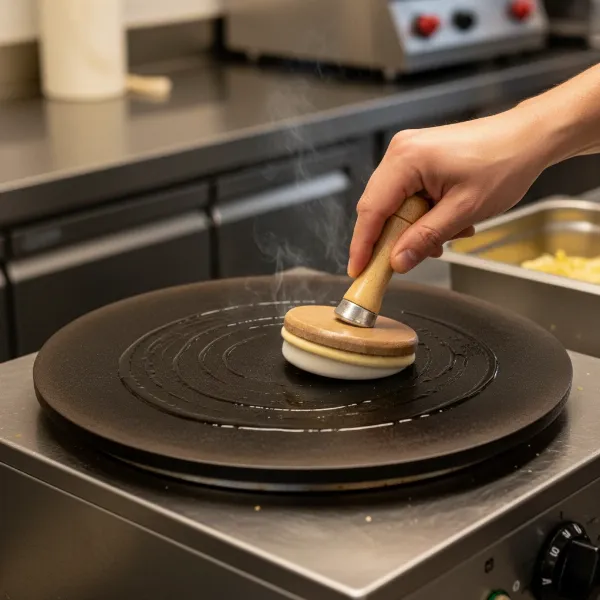 Hand applying a thin layer of cooking oil onto a hot crepe maker griddle with a greasing pad.
Specific Crepe Maker Types
- Cast Iron/Carbon Steel: These types thrive on consistent use and proper seasoning. The more you cook with them using appropriate oils, the better their non-stick properties become. Always clean gently and re-oil lightly after each use for maintenance.
- Non-Stick Electric Crepe Makers: These usually have a factory-applied non-stick coating (often PTFE or ceramic). They require very minimal oil, primarily to aid in browning and for flavor. Use a high-quality, non-abrasive spatula to protect the coating. Avoid excessive heat or aggressive scrubbing, which can damage the surface.
Maintenance Tips for Your Crepe Maker & Its Seasoning
Proper maintenance extends the life of your crepe maker and preserves its non-stick performance.
- Clean After Each Use: Once your crepe maker has cooled, gently wipe down the surface with a soft, damp cloth or paper towel to remove any batter residue. For stubborn spots on cast iron or carbon steel, a plastic scraper can be helpful. Avoid harsh detergents or abrasive scrubbers, especially on seasoned or non-stick surfaces.
- Avoid Soaking: Never submerge electric crepe makers in water. For cast iron or carbon steel, avoid prolonged soaking, which can lead to rust and strip away seasoning.
- Re-season When Needed: If you notice crepes starting to stick more frequently, or if patches of seasoning wear off, it might be time for a light re-seasoning. Follow the initial seasoning steps, focusing on the affected areas.
- Storage: Store your crepe maker in a dry place. For cast iron or carbon steel, a very thin, almost invisible, layer of oil after cleaning can help protect against rust during storage.
Conclusion
Mastering the art of crepe making involves understanding every component, and the seemingly small detail of choosing the right oil for greasing your crepe maker is, in fact, a cornerstone of success. By opting for high smoke point, neutral-flavored oils like canola, grapeseed, sunflower, or avocado oil, you set the stage for crepes that are consistently non-stick, beautifully browned, and pure in flavor. Remember the crucial distinction between initial seasoning for traditional griddles and the light, routine greasing required for all types. With the right oil and proper technique, your crepe maker will become a joy to use, yielding perfect, delicate crepes every time.
What’s your go-to oil for achieving that perfect golden crepe? Share your secrets!
Frequently Asked Questions
What is the best oil for seasoning a new crepe maker?
For seasoning a new cast iron or carbon steel crepe maker, high smoke point and neutral-flavored oils like sunflower oil, canola oil, or grapeseed oil are ideal. These oils can withstand the high heat required for polymerization, forming a durable, non-stick layer without imparting unwanted flavors.
Can I use olive oil to grease my crepe maker?
It’s generally not recommended to use extra virgin olive oil (EVOO) due to its low smoke point and strong flavor. It will likely burn and smoke at crepe-making temperatures, leaving a bitter taste and residue. Regular olive oil has a slightly higher smoke point, but neutral-flavored, high smoke point oils are still better choices for optimal results.
How often should I oil my crepe maker?
The frequency of oiling depends on your crepe maker type and how well-seasoned it is. For new or re-seasoned cast iron/carbon steel, you might oil before almost every crepe initially. For well-seasoned or non-stick electric crepe makers, you may only need to lightly oil every 2-3 crepes, or less, depending on your batter and desired browning.
Is cooking spray a good option for greasing a crepe maker?
While convenient, many cooking sprays contain propellants, anti-foaming agents, and often lecithin, which can build up on your crepe maker’s surface over time, leading to a sticky, gummy residue that is difficult to remove and can impair non-stick performance. A small amount of liquid oil applied with a pad or paper towel is generally preferred.
What temperature should my crepe maker be for greasing?
When greasing for routine cooking, your Crepe Maker should be preheated to your desired cooking temperature (typically medium-high). For initial seasoning of cast iron or carbon steel, the griddle should be heated to a very high temperature, often around 500°F (260°C), to allow the oil to polymerize effectively.