As an Admin at CrepeMakerDepot.com and a technician with over a decade of deep expertise in crepe makers, I’ve seen countless machines, from basic home models to sophisticated restaurant equipment. The heart of any great crepe lies in its cooking surface. When you’re ready to create those delicate, paper-thin treats, the choice between a cast iron and a non-stick aluminum plate on your crepe maker is paramount. Each material offers a distinct experience and yields unique results, directly impacting your crepe-making journey. Understanding these differences is key to selecting the ideal crepe maker that aligns with your skills, usage, and culinary aspirations.
Understanding Crepe Maker Plates: Cast Iron Explained
Cast iron plates have been a favorite among traditionalists and professionals for generations, and for good reason. These plates are typically made from a single pour of molten iron, creating a robust and incredibly dense cooking surface. When properly cared for, a well-seasoned cast iron plate develops a natural, slick non-stick layer that only improves with age and use.
The primary advantage of cast iron lies in its exceptional heat retention and distribution. Once heated, it maintains a consistent temperature across the entire surface, ensuring even cooking and beautiful, uniform browning on your crepes. This thermal mass makes it ideal for achieving that slightly crispy edge and tender interior that many connoisseurs cherish. Cast iron is also remarkably durable; it’s practically indestructible with proper care and can withstand high temperatures without warping or degrading, making it a true lifetime investment.
However, cast iron does come with its unique considerations. It’s significantly heavier than aluminum, which can make handling a crepe pan challenging for some, although dedicated crepe makers minimize this by being stationary. It also requires a longer preheating time to reach its optimal cooking temperature. Maintenance involves regular seasoning to build and maintain its non-stick properties, and it must be thoroughly dried after cleaning to prevent rust. While it offers superior crepe quality, it demands a bit more patience and commitment from the cook.
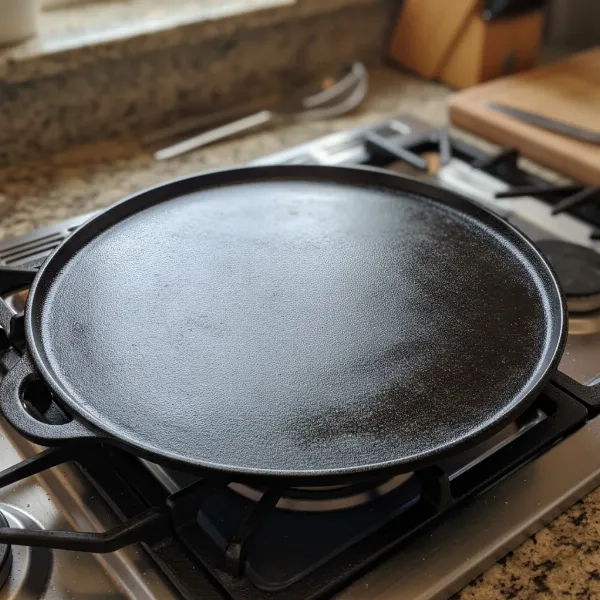 A close-up of a well-seasoned cast iron crepe maker plate, showing its dark, smooth surface.
Understanding Crepe Maker Plates: Non-Stick Aluminum Explained
Non-stick aluminum plates offer a modern, convenient approach to crepe making, designed for ease of use and quick results. These plates feature a lightweight aluminum base, usually coated with one or more layers of a synthetic non-stick material, often PTFE (Teflon) or ceramic-based.
The most significant benefit of non-stick aluminum is its user-friendliness. Its lightweight nature makes it incredibly easy to spread batter with the traditional lift-and-tilt method, which is often crucial for achieving thin crepes. Aluminum heats up rapidly, allowing you to start cooking almost immediately. The non-stick coating ensures that crepes release effortlessly, even with minimal oil, making cleanup a breeze. This makes non-stick aluminum an excellent choice for beginners, casual crepe enthusiasts, or anyone who prioritizes convenience and speed.
Conversely, the lifespan of a non-stick coating is finite. Over time, the coating can degrade, scratch, or wear away, diminishing its non-stick properties and potentially requiring replacement. It’s crucial to use only non-metal utensils to avoid scratching the surface, and exposing the plate to excessively high temperatures can damage the coating. While efficient, non-stick aluminum might not deliver the same depth of browning or specific textural qualities that a well-used cast iron plate can achieve.
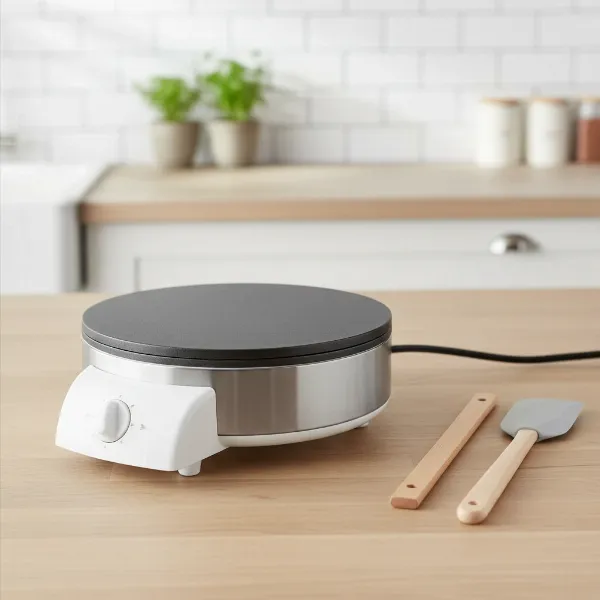 A sleek, modern non-stick aluminum crepe maker with a light-colored coating, emphasizing ease of use.
Cast Iron vs. Non-Stick Aluminum: A Direct Comparison
Choosing between cast iron and non-stick aluminum ultimately depends on your priorities in the kitchen. Here’s a detailed comparison to help clarify the differences:
| Feature | Cast Iron Plates | Non-Stick Aluminum Plates |
|---|---|---|
| Durability | Extremely high, lasts decades with proper care | Moderate, coating wears off over time (1-10 years) |
| Heat Retention | Excellent, very even and stable heat | Good, heats quickly but may have less thermal mass |
| Non-Stick | Naturally develops with seasoning, improves with age | Synthetic coating, excellent initially, degrades with use |
| Maintenance | Requires seasoning, careful cleaning (no harsh soap), drying to prevent rust | Easy to clean, specific care for coating (non-metal utensils) |
| Weight | Heavy | Lightweight |
| Preheating Time | Longer | Shorter |
| Cost | Often higher initial investment for quality | Generally more affordable initially |
| Ideal User | Experienced cooks, enthusiasts, professionals | Beginners, casual users, those valuing convenience |
| Crepe Quality | Superior browning, traditional texture, robust flavor | Good, consistent, but may lack deep browning/crispness |
This table highlights that while non-stick aluminum excels in immediate convenience and ease, cast iron offers unparalleled longevity and a distinct quality of crepe that many find superior.
Choosing the Right Crepe Maker Plate for You
When it comes to selecting the perfect crepe maker, considering your personal needs and preferences is crucial. As a technician who’s seen it all, I can tell you that the “best” plate isn’t universal—it’s the one that best fits your kitchen and your cooking style.
First, assess your skill level. If you’re a novice in the art of crepe making, a non-stick aluminum plate might be your best bet. Its forgiveness and easy release will boost your confidence and reduce frustration. For seasoned chefs or those eager to master traditional techniques, the learning curve of cast iron is a rewarding challenge.
Next, consider your usage frequency. Do you plan to whip up crepes daily, or only for special occasions? For frequent use, a durable cast iron plate, with its ever-improving natural non-stick surface, is an excellent long-term companion. If crepes are an occasional treat, the immediate convenience of non-stick aluminum might be more appealing, even with its shorter lifespan.
Think about your desired crepe style. Are you aiming for delicately browned, slightly crisp-edged crepes reminiscent of French street food? Cast iron’s consistent, high heat is your ally. If you prefer softer, paler crepes, or perhaps just want quick, reliable results without fuss, non-stick aluminum will deliver consistently.
Your willingness to maintain cookware is also a factor. If you appreciate the ritual of seasoning and caring for cast iron, you’ll find great satisfaction in its performance. If you prefer minimal fuss and quick cleanup, the low-maintenance nature of non-stick aluminum will be more aligned with your lifestyle.
Finally, consider your budget. While quality cast iron can be a higher upfront investment, its longevity often makes it more cost-effective over many years. Non-stick aluminum crepe makers are generally more affordable, making them an accessible entry point into crepe making.
Maximizing Your Crepe Maker’s Lifespan: Care Tips for Both Plates
Regardless of your choice, proper care and maintenance are essential for extending the life of your crepe maker and ensuring perfect crepes every time.
Cast Iron Care
|
Our Picks for the Best Crepe maker in 2026
As an Amazon Associate I earn from qualifying purchases.
|
||
| Num | Product | Action |
|---|---|---|
| 1 | Nutrichef Electric Crepe Maker - 8-inch Nonstick Cooktop with On/Off Switch - Cooks Roti, Tortillas & Pancakes - Automatic Temperature Control & Cool Touch Handle - Includes Food Bowl, Whisk & Spatula |

|
| 2 | Moss & Stone Electric Crepe Maker 8 Inch, Portable Crepe Maker & Hot Plate Cooktop On/Off Switch, Nonstick Coating, Automatic Temperature Control, Easy To Use For Pancakes, Blintz, Chapati |
|
| 3 | Moss & Stone 12” Electric Griddle Pan & Crepe Machine, Non-Stick Electric Crepe Maker with Adjustable Temperature, Includes Spreader & Spatula – Ideal for Pancakes, Blintzes & Tortillas |
|
| 4 | Moss & Stone Electric Crepe Maker – 8” Portable Crepe Pan Nonstick with Dipping Plate, Auto Shut-Off, On/Off Switch, Even Heating & One Automatic Temperature Control – Compact Crepe Maker |
|
| 5 | Nutrichef Electric Crepe Maker & Griddle Cooktop - Nonstick 12 Inch Aluminum Hot Plate with LED Indicator Lights & Adjustable Temperature Control - Wooden Spatula & Batter Spreader Included |
|
| 6 | Gourmia 8” Electric Crepe Maker – Nonstick Ceramic Surface, One-Touch Operation, Includes Batter Tray, Compact & Easy to Clean, Crepe, Pancake & Tortilla Maker |
|
| 7 | Gourmia 12” Crepe Maker – Nonstick Electric Griddle for Pancakes, Omelets & More, Precise Temp Control with Indicator Lights, Includes Spatula & Batter Spreader, Quick Cleanup, Stainless Steel Trim |
|
| 8 | Baker's Friend Instant Crepe Maker with Handle, Electric Crepe Maker Machine, Crepera Electrica, 8 Inch Non-stick Cooking Surface, Aqua |
|
| 9 | Electric Crepe Maker 12'' & Griddle - Non-Stick Pan With Spreader for Roti, Tortilla, Blintzes, Pancakes - Adjustable Temperature, 1000W |
|
| 10 | 16 Inch Commercial Crepe Maker, Dual-Head, Dual Zone Temp Setting, Nonstick Pancake Griddle Machine, 50-300°C(120-570℉), 3400W, S.S. Shell, for Catering, Restaurant, Snack Stand, CE Certified |
|
For cast iron, the key is maintaining its seasoning. After each use, clean the plate with hot water and a stiff brush or non-abrasive scrubber. Avoid harsh soaps, as they can strip away the seasoning. Dry the plate immediately and thoroughly to prevent rust – I often recommend placing it back on low heat for a few minutes until completely dry. Periodically, apply a thin layer of cooking oil and heat it until it smokes, then let it cool. This re-seasons the surface, enhancing its non-stick properties. Always store cast iron in a dry place.
Non-Stick Aluminum Care
Non-stick aluminum plates require a gentler approach to protect their delicate coating. Always use wooden, silicone, or plastic utensils to avoid scratching the surface. Never use abrasive cleaners or metal scouring pads. Wash the plate with warm, soapy water and a soft sponge, then rinse and dry thoroughly. Avoid overheating the plate on an empty burner, as excessive heat can damage the non-stick coating and reduce its effectiveness over time. Sticking to medium-low heat settings is usually sufficient for crepes and helps preserve the coating.
Conclusion
The choice between a cast iron and non-stick aluminum plate for your crepe maker boils down to a balance between tradition, performance, and convenience. Cast iron offers unparalleled durability, superior heat retention, and the ability to produce truly authentic, beautifully browned crepes, albeit with a commitment to seasoning and care. Non-stick aluminum, on the other hand, provides immediate ease of use, rapid heating, and effortless release, making it a fantastic option for those seeking simplicity and quick results.
As an expert in the field, I encourage you to weigh these factors carefully. Your perfect crepe maker isn’t just a tool; it’s an extension of your culinary passion. By understanding the nuances of each plate material, you’re empowered to make an informed decision that will bring countless delicious crepes to your table. Which plate material do you believe will best elevate your crepe-making experience?
Frequently Asked Questions
Is cast iron truly non-stick for crepes?
Yes, a properly seasoned and well-maintained cast iron plate develops a natural, highly effective non-stick surface over time. The seasoning creates a polymerized oil layer that prevents food from sticking, making it excellent for crepes once established.
How long do non-stick crepe maker plates last?
The lifespan of non-stick aluminum plates can vary significantly, typically ranging from 1 to 10 years, depending on the quality of the coating, frequency of use, and adherence to proper care instructions. Scratches or excessive heat can accelerate wear.
Can I use metal spatulas on a non-stick crepe maker?
No, it is strongly advised against using metal spatulas or other metal utensils on non-stick crepe maker plates. Metal can scratch and damage the non-stick coating, compromising its effectiveness and potentially shortening the plate’s lifespan. Opt for silicone, wood, or plastic.
Why are cast iron crepe makers heavier?
Cast iron is a dense material, and Crepe Maker plates are often cast thickly to ensure excellent heat retention and even heat distribution. This substantial mass is what contributes to their significant weight compared to lightweight aluminum alternatives.
Does plate material affect crepe flavor?
While the plate material doesn’t inherently impart flavor to the crepe batter, it significantly influences the crepe’s texture and browning. Cast iron, with its consistent high heat, can achieve a deeper, more even browning and a slightly crisper edge, which can enhance the overall sensory experience and perceived flavor.