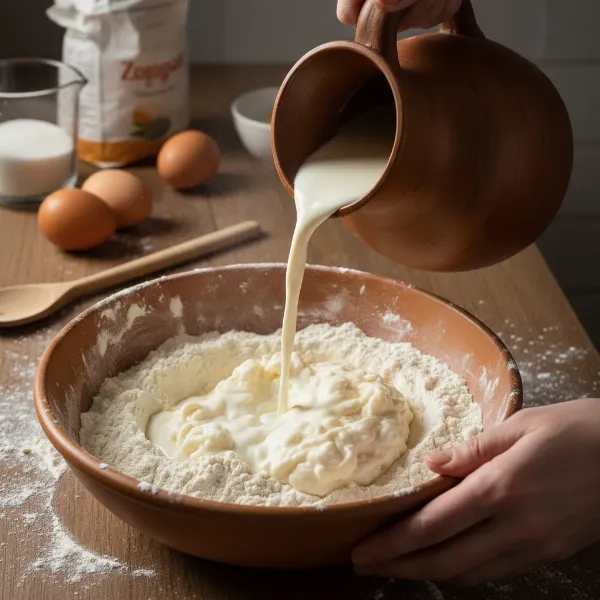
Embarking on the Crepe-Making Journey: Gas vs. Electric Crepe Makers
Embarking on the journey of crepe making, whether for a bustling cafe or a quiet Sunday brunch at home, often leads to a pivotal decision: gas or electric? The right crepe maker can transform your culinary experience, ensuring every crepe is a golden, delicate masterpiece. This comprehensive guide will dissect the nuances between gas and electric crepe machines, helping you navigate their pros and cons to find the ideal companion for your crepe-making adventures.
Understanding Crepe Makers: The Core Difference
At its heart, a crepe maker is a specialized griddle designed to cook thin, flat pastries evenly and efficiently. While the goal is the same—producing perfect crepes—the method of heating defines their fundamental difference. Gas crepe makers utilize propane or natural gas to heat a cast iron or steel surface, providing robust and often rapid heat. Electric models, conversely, rely on an electrical heating element beneath the cooking surface, offering convenient plug-and-play operation. Each type brings its own set of strengths and weaknesses to the table, influencing factors from portability and precision to overall cost and operational environment.
Gas Crepe Makers: The Power and Precision Choice
Gas crepe makers are often the workhorses of professional kitchens and outdoor catering events, prized for their formidable heating capabilities and consistent performance. They tap into the raw power of gas to deliver a cooking experience tailored for speed and high volume.
Advantages of Gas Crepe Makers
Gas models boast several compelling benefits that make them a favorite among seasoned crepe artisans:
- Rapid Heat-Up & High Production: Gas burners typically heat the cooking surface much faster than their electric counterparts, significantly boosting production rates. This quick recovery time is crucial in busy environments where efficiency is key. For instance, some professional gas models can cook a crepe in about a minute, compared to 2.5 minutes for traditional electric setups.
- Precise Temperature Control: Many professional gas crepe makers feature sophisticated burner designs, such as star-shaped elements, that ensure remarkably homogeneous heat distribution across the entire cooking surface. This allows for very precise temperature adjustments, crucial for achieving that perfect golden-brown crepe without burning or undercooking.
- Energy Efficiency (for High Volume): While initial perceptions might vary, gas can be highly energy-efficient for sustained, high-volume use. The direct heat transfer and quick response to temperature changes can mean lower energy consumption per crepe produced, especially when the machine is running continuously for extended periods.
- Independence from Electricity: A significant advantage for mobile catering or areas prone to power interruptions, gas crepe makers can operate without electricity (assuming they use a manual ignition), offering unmatched flexibility and reliability in diverse settings.
- Durability & Robustness: Often constructed from heavy-duty materials like enameled cast iron or stainless steel, gas crepe makers are built to withstand the rigorous demands of commercial use, promising long-term durability and performance. Brands like Krampouz and Roller Grill are known for their robust gas models.
|
Our Picks for the Best Crepe maker in 2026
As an Amazon Associate I earn from qualifying purchases.
|
||
| Num | Product | Action |
|---|---|---|
| 1 | Baker's Friend Instant Crepe Maker with Handle, Electric Crepe Maker Machine, Crepera Electrica, 8 Inch Non-stick Cooking Surface, Aqua |

|
| 2 | Nutrichef Electric Crepe Maker - 8-inch Nonstick Cooktop with On/Off Switch - Cooks Roti, Tortillas & Pancakes - Automatic Temperature Control & Cool Touch Handle - Includes Food Bowl, Whisk & Spatula |
|
| 3 | Gourmia 12” Crepe Maker – Nonstick Electric Griddle for Pancakes, Omelets & More, Precise Temp Control with Indicator Lights, Includes Spatula & Batter Spreader, Quick Cleanup, Stainless Steel Trim |
|
| 4 | Nutrichef Electric Crepe Maker & Griddle Cooktop - Nonstick 12 Inch Aluminum Hot Plate with LED Indicator Lights & Adjustable Temperature Control - Wooden Spatula & Batter Spreader Included |
|
| 5 | 16 Inch Commercial Crepe Maker, Dual-Head, Dual Zone Temp Setting, Nonstick Pancake Griddle Machine, 50-300°C(120-570℉), 3400W, S.S. Shell, for Catering, Restaurant, Snack Stand, CE Certified |
|
| 6 | Moss & Stone 12” Electric Griddle Pan & Crepe Machine, Non-Stick Electric Crepe Maker with Adjustable Temperature, Includes Spreader & Spatula – Ideal for Pancakes, Blintzes & Tortillas |
|
| 7 | Moss & Stone Electric Crepe Maker 8 Inch, Portable Crepe Maker & Hot Plate Cooktop On/Off Switch, Nonstick Coating, Automatic Temperature Control, Easy To Use For Pancakes, Blintz, Chapati |
|
| 8 | Moss & Stone Electric Crepe Maker – 8” Portable Crepe Pan Nonstick with Dipping Plate, Auto Shut-Off, On/Off Switch, Even Heating & One Automatic Temperature Control – Compact Crepe Maker |
|
| 9 | Gourmia 8” Electric Crepe Maker – Nonstick Ceramic Surface, One-Touch Operation, Includes Batter Tray, Compact & Easy to Clean, Crepe, Pancake & Tortilla Maker |
|
| 10 | Electric Crepe Maker 12'' & Griddle - Non-Stick Pan With Spreader for Roti, Tortilla, Blintzes, Pancakes - Adjustable Temperature, 1000W |
|
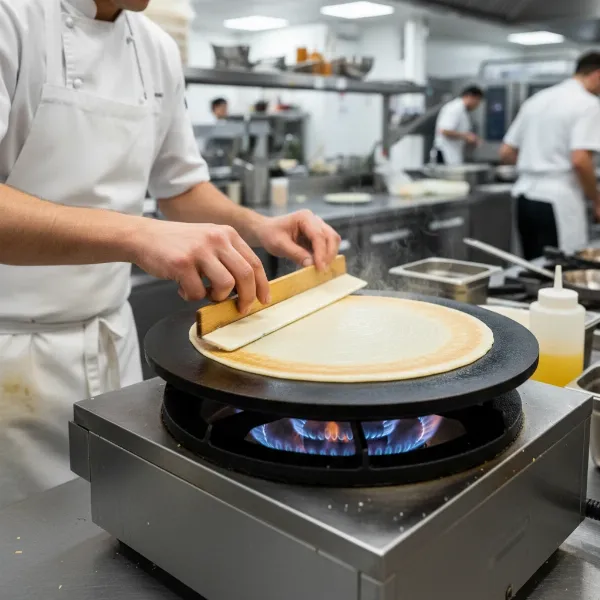 A professional chef spreading batter on a commercial gas crepe maker in a busy kitchen
Disadvantages of Gas Crepe Makers
Despite their strengths, gas crepe makers come with certain considerations:
- Fuel Dependency & Ventilation: They require either a connection to a natural gas line or the use of propane tanks, which need regular refilling or a dedicated hookup. Crucially, gas models must always be operated in well-ventilated areas to ensure safety and prevent the buildup of combustion byproducts.
- Size and Portability: Generally, gas units are heavier and bulkier than electric ones, making them less convenient to move. While some propane-fueled models offer a degree of portability for outdoor events, those connected to a natural gas line are fixed installations.
- Installation & Safety Concerns: Setting up a gas crepe maker can be more complex, often requiring professional installation to ensure proper gas line connection and ventilation. There are inherent safety concerns associated with handling gas and open flames, necessitating careful operation and maintenance.
- Higher Initial Cost: Professional-grade gas crepe makers typically carry a higher upfront price tag compared to consumer-level electric models, reflecting their commercial-grade construction and advanced heating systems.
Electric Crepe Makers: Convenience Meets Versatility
Electric crepe makers are celebrated for their simplicity, accessibility, and versatility, making them a popular choice for home cooks and smaller commercial operations. They excel in providing a user-friendly experience without the complexities associated with gas.
Advantages of Electric Crepe Makers
Electric models offer a suite of benefits, particularly appealing to those seeking convenience and flexibility:
- Ease of Use & Accessibility: Simply plug them into a standard electrical outlet, and you’re ready to go. There are no gas lines or tanks to manage, making them incredibly straightforward to operate and suitable for almost any indoor kitchen setting.
- Compact & Portable: Most electric crepe makers are lighter and more compact than their gas counterparts, making them easy to store, transport, and set up in various locations, as long as a power socket is available. This makes them ideal for home use, small gatherings, or pop-up events.
- Lower Operating Costs (for Home Use): For intermittent, casual home use, electric crepe makers can often result in lower operating costs by avoiding the need for propane refills or significant gas utility bills.
- Safety & Cleanliness: Without an open flame, electric crepe makers generally present fewer safety hazards. They are often designed with non-stick surfaces that are remarkably easy to clean, contributing to a more hygienic and hassle-free cooking experience.
- Versatility: Many electric models are designed to be multi-functional, doubling as griddles for preparing other breakfast items like pancakes, eggs, bacon, or even warming tortillas. Brands like NutriChef offer versatile electric griddle-crepe makers.
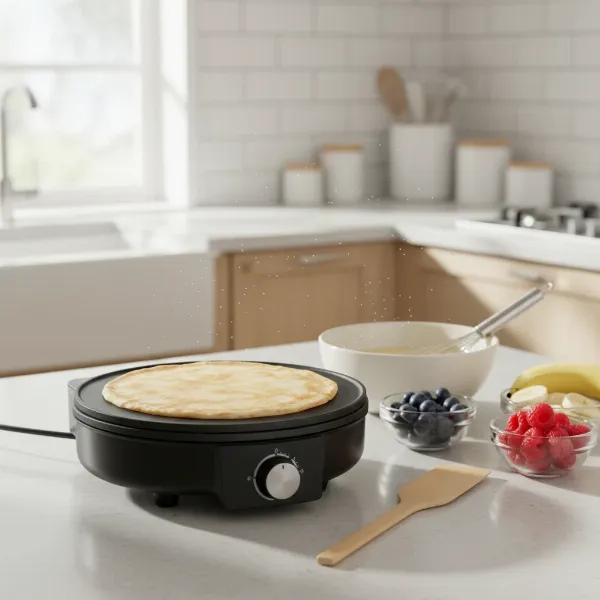 A compact electric crepe maker in use on a modern kitchen countertop.
Disadvantages of Electric Crepe Makers
While highly convenient, electric crepe makers do have some limitations:
- Slower Heat-Up & Production Rate: Electric heating elements can sometimes take longer to reach the desired temperature and may have slower heat recovery times compared to gas. This can impact the speed of production, making them less ideal for very high-volume scenarios.
- Heat Distribution Variability: While high-quality electric models minimize this, some lower-end electric crepe makers can suffer from uneven heat distribution, leading to inconsistently cooked crepes. Choosing a professional-grade electric unit can mitigate this issue.
- Power Dependency: Their reliance on electricity means they are unusable during power outages, which can be a significant drawback for commercial operations that require continuous service.
- Energy Consumption (for High Volume): For continuous, high-volume commercial use, electric models might be less energy-efficient than gas, potentially leading to higher electricity bills over time compared to the cost of gas per crepe.
- Size Limitations: While many electric models offer generous cooking surfaces, consumer-grade machines might have size limitations that prevent the creation of very large, professional-style crepes (40-50 cm in diameter) often found in dedicated crepe shops.
Choosing Your Ideal Crepe Maker: A Buying Guide
Selecting between a gas and electric crepe maker ultimately boils down to your specific needs and priorities. Consider these factors to make an informed decision:
Assess Your Crepe Making Needs
- Home vs. Commercial Use: For occasional home use, convenience, safety, and a lower initial cost typically favor electric models. For commercial settings like restaurants, food trucks, or kiosks, the speed, precision, and durability of gas often make it the superior choice.
- Frequency and Volume of Crepes: If you plan to make crepes infrequently or in small batches, an electric model is likely sufficient. For daily, high-volume production, a gas crepe maker’s efficiency will be a major asset.
- Budget: Electric models generally have a lower entry price point, while professional gas models represent a more substantial investment. Factor in not just the purchase price but also potential long-term operating costs (electricity vs. gas refills/lines).
Key Factors to Consider
Beyond the power source, several other attributes define a crepe maker’s performance and suitability:
- Cooking Surface Material:
- Cast Iron: Excellent heat retention and even heat distribution once seasoned. Durable and long-lasting, making it a favorite for commercial use. Requires seasoning and specific cleaning.
- Non-Stick (Teflon): Easy to clean and use, heats up quickly. However, it can be less durable and may scratch or flake over time.
- Steel: Offers great heat retention and durability, making it a robust choice for commercial kitchens, though it might have a higher initial cost.
- Plate Size & Configuration: Standard home models typically range from 10 to 13 inches, while commercial plates can be 16 inches or more. Consider if you need a single cooking surface or a dual crepe maker to maximize output.
- Power & Temperature Control: For electric models, higher wattage often means faster heating. Regardless of type, look for precise, adjustable thermostats to give you full command over your crepe’s doneness.
- Portability & Placement: Evaluate your available counter space and whether the machine needs to be moved frequently. Gas models require proximity to a gas line or space for a propane tank, along with proper ventilation.
- Safety Features: Ensure the unit has essential safety features like stable feet, cool-touch handles (for some electric models), and automatic shut-off mechanisms.
- Ease of Cleaning: A non-stick or easily cleanable surface is paramount for maintaining hygiene and saving time after each use.
Expert Tips for Using and Maintaining Your Crepe Maker
Maximizing the lifespan and performance of your crepe maker, regardless of its power source, involves proper usage and diligent care:
- Preheating is Key: Always allow your crepe maker to fully preheat to the recommended temperature before pouring batter. This ensures even cooking and prevents crepes from sticking.
- Master the Spreader: Invest in a good quality T-shaped batter spreader (rateau) and a thin spatula. Learning the correct technique for spreading batter thinly and evenly is crucial for perfect crepes.
- Use the Right Amount of Batter: Too much batter results in thick crepes; too little, and you’ll struggle to cover the surface. Practice will help you find the sweet spot.
- Clean After Each Use: Allow the surface to cool slightly, then gently wipe it clean with a damp cloth or sponge. Avoid abrasive cleaners or metal utensils that can damage non-stick coatings or seasoned cast iron.
- Proper Storage: Store your crepe maker in a dry, cool place. For cast iron, ensure it’s thoroughly dry and lightly oiled to prevent rust.
“Choosing the right crepe maker is about more than just making crepes; it’s about investing in an experience that perfectly matches your culinary environment and ambitions.”
Conclusion: Gas or Electric – Your Crepe Journey Starts Here
The choice between a gas and an electric crepe maker boils down to balancing power, precision, portability, and practicality against your specific needs. Gas models offer robust performance, rapid heating, and consistent results, making them ideal for high-volume commercial settings where reliability and speed are paramount. Electric units, on the other hand, provide unparalleled convenience, ease of use, and portability for home cooks and smaller operations.
Ultimately, there isn’t a universally “better” option; there’s only the best crepe maker for you. By carefully considering your usage, budget, and the specific advantages and disadvantages of each type, you can confidently select a crepe machine that will help you create countless delicious crepes. So, what kind of crepe maker will be flipping deliciousness in your kitchen?
Frequently Asked Questions
Is a gas crepe maker better for commercial use?
Yes, gas crepe makers are generally considered better for commercial use due to their faster heat-up times, consistent high heat, and ability to operate continuously for long periods. This leads to higher production rates and reliable performance crucial for busy establishments.
Can electric crepe makers make crepes as thin as gas models?
Absolutely. The ability to make thin crepes depends more on the cooking surface material, temperature control, and the skill of the chef in spreading the batter than on the power source itself. High-quality electric models with precise temperature controls can produce crepes just as thin and delicate as gas models.
How important is the cooking surface material?
The cooking surface material is highly important as it directly impacts heat distribution, retention, and ease of use. Cast iron is favored for its even heat and durability, while non-stick coatings offer convenience. Steel is also a popular commercial choice for its robustness and excellent heat properties.
Are there portable gas crepe makers?
Yes, gas crepe makers designed to run on propane tanks are indeed portable. They are a popular choice for food trucks, outdoor events, and catering, as they offer the power of gas without being tethered to a natural gas line. However, they are typically heavier and require propane tank management.
What are the typical costs of gas vs. electric crepe makers?
Generally, consumer-grade electric crepe makers range from $30-$100, while more advanced home or entry-level commercial electric models can be $100-$300. Professional gas Crepe Makers typically start from $400 and can go well over $1,000, reflecting their heavy-duty construction and higher output capabilities.