Craving those perfect, paper-thin crepes but finding your results less than ideal? The secret often lies not just in your crepe maker itself, but in the crucial accessories that support it. As an admin for CrepeMakerDepot.com with over a decade of hands-on experience, I’ve seen firsthand how the right tools can transform a frustrating endeavor into a delightful culinary art. From simple home devices to bustling restaurant setups, understanding these small but mighty companions is key. This guide will walk you through the top five essential accessories every crepe maker owner needs to craft flawless crepes, enhancing your experience and ensuring delicious results every time.
Essential Crepe Maker Accessories
Achieving consistently thin, perfectly cooked crepes requires precision, and these five accessories are the unsung heroes of the crepe-making process. Each plays a vital role in perfecting your technique, from batter preparation to flipping and serving.
1. The Crepe Spreader (Rozell)
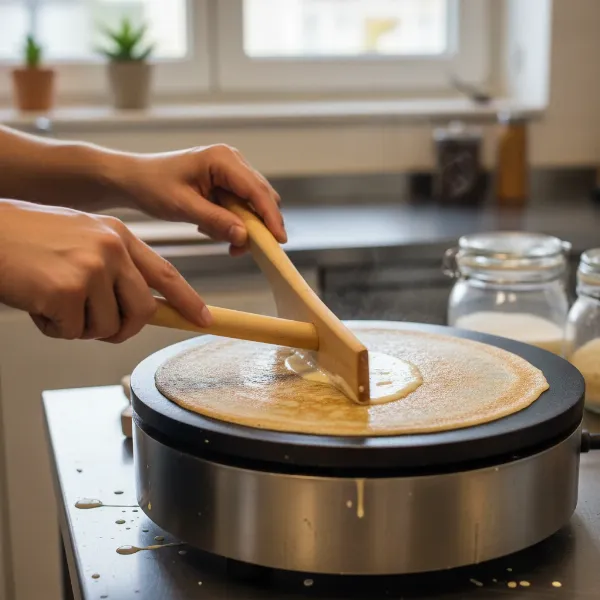
The crepe spreader, traditionally known as a “rozell,” is arguably the most iconic and indispensable tool for any crepe maker owner. It’s designed to evenly distribute batter across the hot surface, creating that signature delicate thinness.
- Why it’s essential: A good spreader ensures uniform thickness, which is critical for even cooking and preventing holes. Without it, achieving a truly thin crepe is incredibly challenging.
- Types: Spreaders come in various materials, including wooden (boxwood, beech), stainless steel, and silicone. Wooden spreaders are traditional and widely popular. Within wooden options, you’ll find flat and round designs. Many experts recommend round spreaders for beginners due to their balanced weight, which naturally applies the right amount of pressure for even spreading. Flat spreaders, while capable of producing extremely thin crepes, require more practice and a delicate touch.
- Tips for choosing and using: Match the spreader size to your crepe maker’s griddle diameter for optimal coverage. Wooden spreaders should be slightly moistened before use to prevent batter from sticking and ensure a smooth glide.
|
Our Picks for the Best Crepe maker in 2026
As an Amazon Associate I earn from qualifying purchases.
|
||
| Num | Product | Action |
|---|---|---|
| 1 | Gourmia 12” Crepe Maker – Nonstick Electric Griddle for Pancakes, Omelets & More, Precise Temp Control with Indicator Lights, Includes Spatula & Batter Spreader, Quick Cleanup, Stainless Steel Trim |

|
| 2 | Baker's Friend Instant Crepe Maker with Handle, Electric Crepe Maker Machine, Crepera Electrica, 8 Inch Non-stick Cooking Surface, Aqua |
|
| 3 | Gourmia 8” Electric Crepe Maker – Nonstick Ceramic Surface, One-Touch Operation, Includes Batter Tray, Compact & Easy to Clean, Crepe, Pancake & Tortilla Maker |
|
| 4 | 16 Inch Commercial Crepe Maker, Dual-Head, Dual Zone Temp Setting, Nonstick Pancake Griddle Machine, 50-300°C(120-570℉), 3400W, S.S. Shell, for Catering, Restaurant, Snack Stand, CE Certified |
|
| 5 | Moss & Stone Electric Crepe Maker 8 Inch, Portable Crepe Maker & Hot Plate Cooktop On/Off Switch, Nonstick Coating, Automatic Temperature Control, Easy To Use For Pancakes, Blintz, Chapati |
|
| 6 | Nutrichef Electric Crepe Maker - 8-inch Nonstick Cooktop with On/Off Switch - Cooks Roti, Tortillas & Pancakes - Automatic Temperature Control & Cool Touch Handle - Includes Food Bowl, Whisk & Spatula |
|
| 7 | Electric Crepe Maker 12'' & Griddle - Non-Stick Pan With Spreader for Roti, Tortilla, Blintzes, Pancakes - Adjustable Temperature, 1000W |
|
| 8 | Nutrichef Electric Crepe Maker & Griddle Cooktop - Nonstick 12 Inch Aluminum Hot Plate with LED Indicator Lights & Adjustable Temperature Control - Wooden Spatula & Batter Spreader Included |
|
| 9 | Moss & Stone Electric Crepe Maker – 8” Portable Crepe Pan Nonstick with Dipping Plate, Auto Shut-Off, On/Off Switch, Even Heating & One Automatic Temperature Control – Compact Crepe Maker |
|
| 10 | Moss & Stone 12” Electric Griddle Pan & Crepe Machine, Non-Stick Electric Crepe Maker with Adjustable Temperature, Includes Spreader & Spatula – Ideal for Pancakes, Blintzes & Tortillas |
|
 A wooden crepe spreader distributing batter on a hot griddle.
2. The Crepe Spatula/Turner (Spanell)
Once your batter is perfectly spread, the next challenge is flipping and removing your delicate crepe without tearing it. This is where the specialized crepe spatula, or “spanell,” comes in.
- Why it’s essential: Its unique design, typically thin and flexible, allows you to gently lift the edges and slide under the crepe with minimal effort. This prevents tearing, especially on non-stick surfaces, and makes flipping a breeze.
- Types: Crepe spatulas are commonly available in wood or stainless steel. Wooden spatulas are ideal for non-stick surfaces as they won’t scratch. Stainless steel options offer durability and thinness, often preferred by professionals for their rigidity.
- Tips for choosing and using: Look for a spatula with a thin, tapered edge that can easily get under the crepe. A longer handle provides better leverage and keeps your hand away from the heat. Practice gently sliding the spatula under the crepe, loosening the edges before attempting to flip or fold.
3. The Batter Ladle
Consistency is key in crepe making, and the batter ladle is your tool for achieving just that. It ensures each crepe starts with the same amount of batter, leading to predictable cooking times and uniform results.
- Why it’s essential: Using a standard ladle helps you portion the exact amount of batter needed for each crepe, eliminating guesswork and ensuring every crepe is consistently sized and cooked. Inconsistent batter amounts can lead to some crepes being too thick and undercooked, while others are too thin and crispy.
- Material and Capacity: Stainless steel ladles are durable and easy to clean. Many crepe enthusiasts opt for ladles with a specific capacity, such as 90ml or 125ml, which are often ideal for standard crepe maker sizes, though this can vary based on your preferred crepe thickness and griddle diameter.
4. Greasing Pad & Cleaning Tools
Maintaining your crepe maker’s surface is paramount for both performance and longevity. A greasing pad and appropriate cleaning tools are indispensable for a non-stick experience and hygienic operation.
- Why they’re essential: A greasing pad (often with heat-resistant felt) is used to apply a thin, even layer of oil to the cooking surface before each crepe, ensuring it doesn’t stick and develops a beautiful golden hue. Cleaning tools, such as an abrasive stone or specialized cleaning pads, are crucial for removing cooked-on residue without damaging the griddle, especially on cast iron or seasoned surfaces.
- Usage: For new or cast iron crepe makers, a greasing pad is vital for the initial seasoning process. Regular greasing between crepes prevents sticking and improves the crepe’s texture. An abrasive stone, used with care and according to manufacturer instructions, can gently remove carbonized batter, restoring the griddle’s smoothness.
5. High-Quality Mixing Bowls and Whisks
Before the batter even touches the hot surface, its quality is determined by proper mixing. High-quality mixing bowls and whisks are fundamental to preparing a lump-free, perfectly smooth crepe batter.
- Why they’re essential: A smooth batter is the foundation of a great crepe. Durable mixing bowls provide ample space for whisking, while effective whisks ensure all ingredients are thoroughly combined without lumps. This directly impacts the spreadability and texture of your finished crepes.
- Materials and Features: Look for stainless steel or glass mixing bowls for durability and ease of cleaning. Whisks with silicone coatings are gentle on non-stick surfaces if you’re mixing directly in a pan, but traditional stainless steel whisks are excellent for bowl mixing. Having a variety of bowl sizes is also helpful for different batch quantities.
Choosing the Right Crepe Maker Accessories
Selecting the perfect accessories goes beyond just knowing what they are; it’s about matching them to your specific needs and crepe-making style.
- Consider Your Crepe Maker Type: The material of your crepe maker (e.g., non-stick, cast iron, enameled) will dictate the best accessories. Wooden spreaders and spatulas are always safe for non-stick, while metal tools might be suitable for more robust surfaces like cast iron.
- Material Matters: Prioritize materials that are durable, non-reactive, and easy to clean. For spreaders and spatulas, wood offers a traditional feel and is gentle on surfaces, but can warp over time if not cared for. Stainless steel provides longevity and robustness.
- Size and Ergonomics: Ensure your spreader is appropriately sized for your griddle to achieve full coverage. Spatulas and ladles should feel comfortable in your hand and offer good balance for precision.
- Budget vs. Quality: While it’s tempting to go for the cheapest options, investing a little more in high-quality accessories, especially the spreader and spatula, can significantly improve your crepe-making experience and the lifespan of your tools.
- Maintenance Needs: Consider how easy each accessory is to clean and store. Tools that require minimal fuss will be used more often, contributing to a more enjoyable process.
Tips for Using and Maintaining Your Crepe Maker Accessories
To get the most out of your crepe-making journey, proper use and care of your accessories are crucial.
- Prepping Wooden Tools: Always wet your wooden spreader before each use. A quick dip in water or a wipe with a damp cloth prevents batter from sticking and helps it glide smoothly across the hot surface.
- Proper Greasing: Utilize your greasing pad effectively. A very thin, even layer of oil is all you need before each crepe to ensure non-stick performance and a beautiful golden finish. Too much oil can make crepes greasy.
- Gentle Handling: Always be mindful of your crepe maker’s cooking surface. Use wooden or silicone spatulas on non-stick surfaces to avoid scratches that can compromise the coating.
- Thorough Cleaning: Clean all accessories after each use. Batter can dry and harden quickly, making it difficult to remove later. For wooden tools, wash gently by hand and allow them to air dry completely to prevent warping or cracking.
- Storage: Keep your tools organized and protected. Many kits come with storage solutions, or you can use a utensil crock to keep them handy and prevent damage.
Conclusion
Mastering the art of crepe making is a rewarding culinary adventure, and with the right accessories, it becomes an incredibly satisfying experience. From the crucial crepe spreader and spatula that shape your delicate creations, to the precise batter ladle, the essential greasing and cleaning tools, and the fundamental mixing bowls and whisks, each item plays a pivotal role in achieving perfect results. By understanding their functions and investing in quality pieces, you empower yourself to craft crepes that are consistently thin, perfectly cooked, and utterly delicious. So, gather your gear, embrace the process, and prepare to delight yourself and others with exquisite homemade crepes. What delicious fillings will you experiment with first?
Frequently Asked Questions
What’s the difference between a round and flat crepe spreader?
A round crepe spreader is typically recommended for beginners due to its weighted design, which naturally applies even pressure for smooth batter distribution. Flat spreaders require more skill and a lighter touch but can achieve extremely thin crepes once mastered.
Can I use a regular spatula for crepes?
While you can technically use a regular spatula, a specialized crepe spatula (spanell) is designed with a thinner, more flexible edge, making it much easier to slide under delicate crepes without tearing them. This specialized design greatly improves flipping and folding efficiency.
How do I clean wooden crepe tools?
Wooden crepe tools should be hand-washed immediately after use with warm, soapy water. Avoid soaking them for extended periods, as this can cause warping or cracking. Rinse thoroughly and allow them to air dry completely before storing to maintain their integrity.
Is a specific ladle size important for crepes?
Using a specific ladle size, such as 90ml or 125ml, is important for consistency. It ensures you use the same amount of batter for each crepe, leading to uniform thickness and cooking times, which is key for perfect results.
Why do I need a greasing pad?
A greasing pad ensures a very thin and even layer of oil is applied to the Crepe Maker’s surface. This prevents crepes from sticking, helps them cook evenly, and contributes to their beautiful golden-brown color. It’s more effective than simply wiping with a paper towel.