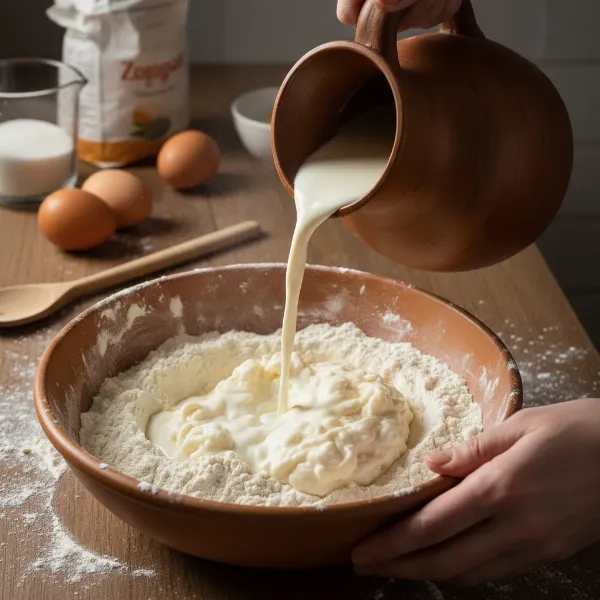
The delicate, thin artistry of a perfectly cooked crepe has captivated palates for centuries. Whether filled with sweet fruits and cream or savory ham and cheese, crepes offer a versatile culinary canvas. But in our fast-paced world, a perennial question arises for every aspiring crepe maker: should you reach for a convenient store-bought mix or whisk up a batch of homemade batter from scratch? This taste test delves into the heart of this delicious dilemma, examining flavor, texture, convenience, and more, to help you decide which method reigns supreme for your kitchen.
Understanding Crepe Batter: The Foundation of Flavor
Before we pit mixes against homemade, let’s briefly understand what makes a crepe. Unlike their fluffy pancake cousins, crepes are characterized by their paper-thin, tender, and slightly chewy texture. This is achieved through a simple, yet precise, batter made primarily from flour, eggs, milk (or water), a touch of sugar, salt, and sometimes melted butter or oil. The low leavening content is key to their signature flatness.
Homemade Crepe Batter: The Artisan’s Advantage
Opting for homemade crepe batter is often seen as the traditional, purist’s route. It’s an opportunity to truly tailor your crepes to your exact preferences, from the quality of ingredients to the subtle nuances of flavor.
Advantages of Homemade Batter:
- Unrivaled Flavor Control: With homemade batter, you dictate every ingredient. You can choose high-quality butter, fresh eggs, organic flour, and your preferred type of milk (dairy, almond, oat, etc.). This control allows for a fresher, richer, and more authentic taste that often surpasses pre-packaged options. You can adjust the sweetness or saltiness to complement your fillings perfectly.
- Customization and Dietary Adaptability: Craving savory crepes for dinner? Omit the sugar or add a pinch of herbs. Need gluten-free options? Easily substitute all-purpose flour with a gluten-free blend or buckwheat flour. Dietary restrictions like dairy intolerance are also easily accommodated by swapping out traditional milk for plant-based alternatives.
- Cost-Effectiveness: While the initial outlay for individual ingredients might seem more, making batter from scratch is generally more economical in the long run, especially if you make crepes frequently. Staple ingredients like flour, sugar, and milk are typically less expensive per serving than a specialized mix.
- Superior Texture Potential: With the right technique and a little patience, homemade batter can produce crepes that are exceptionally thin, delicate, and beautifully tender. Many recipes recommend resting the batter for at least 30 minutes, or even overnight, to allow the flour to fully hydrate and the gluten to relax, resulting in a smoother batter and a more pliable, less prone-to-tear crepe.
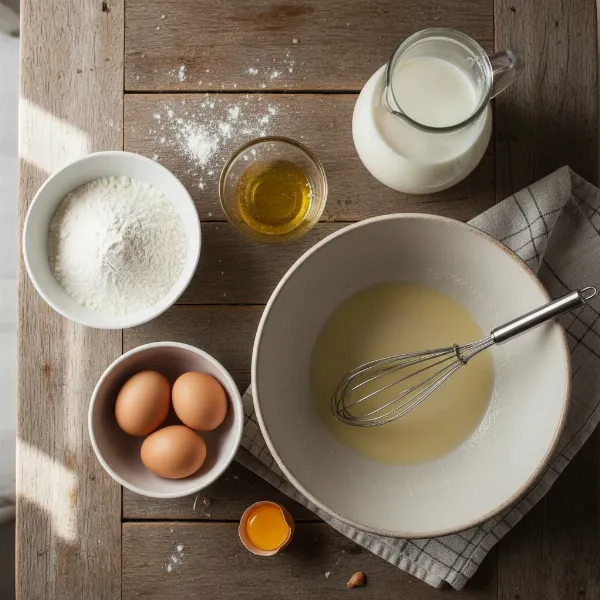 Fresh ingredients for homemade crepe batter, including flour, eggs, milk, and melted butter.
Disadvantages of Homemade Batter:
- Time and Effort: Preparing homemade batter requires measuring out multiple ingredients, whisking them together, and often allowing the batter to rest. This process, while not overly complex, does add a time commitment that a mix bypasses.
- More Cleanup: Using multiple measuring cups, bowls, and whisks inevitably leads to more dishes to wash after the cooking is done.
|
Our Picks for the Best Crepe maker in 2026
As an Amazon Associate I earn from qualifying purchases.
|
||
| Num | Product | Action |
|---|---|---|
| 1 | Moss & Stone Electric Crepe Maker 8 Inch, Portable Crepe Maker & Hot Plate Cooktop On/Off Switch, Nonstick Coating, Automatic Temperature Control, Easy To Use For Pancakes, Blintz, Chapati |

|
| 2 | Baker's Friend Instant Crepe Maker with Handle, Electric Crepe Maker Machine, Crepera Electrica, 8 Inch Non-stick Cooking Surface, Aqua |
|
| 3 | Electric Crepe Maker 12'' & Griddle - Non-Stick Pan With Spreader for Roti, Tortilla, Blintzes, Pancakes - Adjustable Temperature, 1000W |
|
| 4 | Moss & Stone Electric Crepe Maker – 8” Portable Crepe Pan Nonstick with Dipping Plate, Auto Shut-Off, On/Off Switch, Even Heating & One Automatic Temperature Control – Compact Crepe Maker |
|
| 5 | Gourmia 8” Electric Crepe Maker – Nonstick Ceramic Surface, One-Touch Operation, Includes Batter Tray, Compact & Easy to Clean, Crepe, Pancake & Tortilla Maker |
|
| 6 | Nutrichef Electric Crepe Maker & Griddle Cooktop - Nonstick 12 Inch Aluminum Hot Plate with LED Indicator Lights & Adjustable Temperature Control - Wooden Spatula & Batter Spreader Included |
|
| 7 | Moss & Stone 12” Electric Griddle Pan & Crepe Machine, Non-Stick Electric Crepe Maker with Adjustable Temperature, Includes Spreader & Spatula – Ideal for Pancakes, Blintzes & Tortillas |
|
| 8 | Gourmia 12” Crepe Maker – Nonstick Electric Griddle for Pancakes, Omelets & More, Precise Temp Control with Indicator Lights, Includes Spatula & Batter Spreader, Quick Cleanup, Stainless Steel Trim |
|
| 9 | Nutrichef Electric Crepe Maker - 8-inch Nonstick Cooktop with On/Off Switch - Cooks Roti, Tortillas & Pancakes - Automatic Temperature Control & Cool Touch Handle - Includes Food Bowl, Whisk & Spatula |
|
| 10 | 16 Inch Commercial Crepe Maker, Dual-Head, Dual Zone Temp Setting, Nonstick Pancake Griddle Machine, 50-300°C(120-570℉), 3400W, S.S. Shell, for Catering, Restaurant, Snack Stand, CE Certified |
|
Store-Bought Crepe Mixes: The Convenience Champion
In contrast to the artisan approach, store-bought crepe mixes offer a streamlined solution for busy mornings or spontaneous crepe cravings. These mixes aim to deliver a delicious result with minimal fuss.
Advantages of Crepe Mixes:
- Unbeatable Convenience: The primary draw of a crepe mix is its ease of use. Typically, you just add water or milk, whisk, and you’re ready to cook. This significantly cuts down on preparation time and simplifies the process, making crepes accessible even for novice cooks.
- Consistent Results: Mixes are formulated to provide a consistent batter every time, often eliminating the guesswork that can sometimes come with homemade recipes. This reliability is appealing for those who want a predictable outcome without extensive culinary experience.
- Minimal Cleanup: With fewer ingredients to measure and mix, you’ll have fewer dishes to tackle once your crepe feast is over.
Disadvantages of Crepe Mixes:
- Less Ingredient Control: Crepe mixes often contain a standard blend of flours, sugars, and sometimes dehydrated dairy or other additives. This means you have less control over the quality of ingredients and may encounter unwanted preservatives, artificial flavors, or higher levels of sugar and sodium.
- Variable Taste and Texture: While many mixes aim for a good balance, some can fall short in flavor compared to a well-made homemade batter. They might taste blander, overly sweet, or have a subtle “processed” note. The texture can also vary, with some mixes leaning more towards a pancake-like thickness rather than the desired delicate thinness of a true crepe.
- Higher Cost Per Serving: Despite their convenience, crepe mixes can be more expensive per serving than if you were to buy the individual ingredients and make your batter from scratch.
The Ultimate Crepe Taste Test: Head-to-Head
To truly understand the difference, imagine a blind taste test comparing crepes made from a popular mix and a classic homemade recipe, both cooked on the same crepe maker and served with identical toppings.
Taste and Flavor Profile:
- Homemade Crepes: Often exhibit a richer, more nuanced flavor. The freshness of the eggs and milk, combined with the quality of butter (if used in the batter), creates a depth of taste that feels naturally wholesome. The sweetness can be perfectly balanced, allowing the subtle eggy and milky notes to shine through, creating a canvas that truly highlights your chosen fillings.
- Mix Crepes: Can be surprisingly good, offering a pleasant, straightforward sweetness. However, they might lack the complexity and ‘fresh’ taste of their homemade counterparts. Some tasters might detect a slight uniformity or a less authentic undertone, sometimes bordering on a generic “pancake” flavor, if the mix isn’t specifically designed for crepes.
Texture and Consistency:
- Homemade Crepes: When made correctly, homemade crepes are renowned for their almost translucent thinness and tender, slightly elastic chew. They fold and roll beautifully without tearing, providing a delightful mouthfeel that is light and airy.
- Mix Crepes: Most decent crepe mixes will produce a thin product. However, some might result in crepes that are slightly thicker or less pliable than ideal, occasionally leaning towards a softer, more fragile texture. The fine-tuning for that perfect delicate texture is often easier to achieve with a homemade recipe.
Effort and Time Investment:
- Homemade Crepes: The process involves about 5-10 minutes of active mixing, plus a crucial 20-30 minutes (or more) of resting time for the batter. This requires a bit of planning ahead.
- Mix Crepes: Often ready to cook in less than 5 minutes, as the dry ingredients are pre-blended. This makes them ideal for spontaneous treats or quick breakfasts.
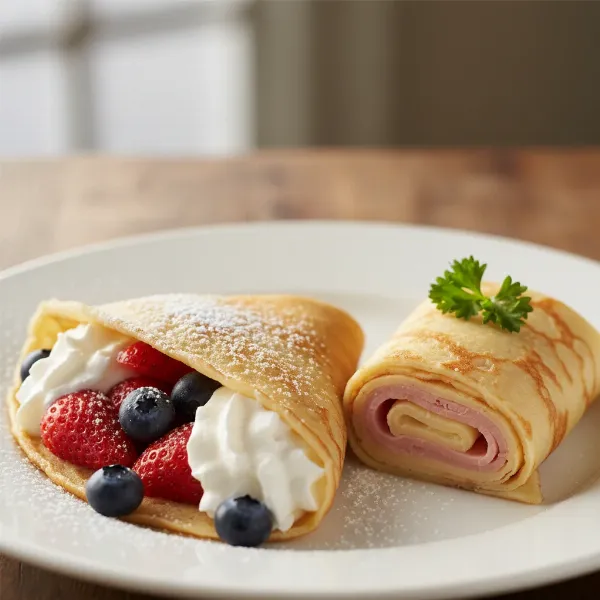 Assortment of delicious crepes, some with sweet fruit and cream, others with savory ham and cheese.
Which One is Right for You?
The “best” choice truly depends on your priorities and culinary style.
- For the Culinary Enthusiast or Health-Conscious Cook: If you prioritize fresh, high-quality ingredients, crave complete control over flavor and nutrition, and don’t mind a little extra prep time, homemade batter is undoubtedly your champion. It offers the satisfaction of crafting something truly bespoke and allows for endless creative variations.
- For the Busy Individual or Beginner: If convenience, speed, and minimal cleanup are your top concerns, and you’re satisfied with a reliably good crepe without the fuss, a store-bought crepe mix is an excellent choice. They are fantastic for quick breakfasts, easy desserts, or when you’re simply short on time but still want to enjoy crepes.
- For the Occasional Crepe Maker: You might find a balance by keeping a high-quality crepe mix on hand for those busy weekdays and reserving homemade batter for special weekend brunches when you have more time to indulge in the process.
Tips for Elevating Your Crepe Experience (Regardless of Batter)
No matter which batter you choose, a few essential tips can elevate your crepe game:
- Use a Dedicated Crepe Maker or Quality Non-Stick Pan: Even heat distribution is key to uniform browning and proper cooking.
- Get the Heat Right: A medium-hot surface is usually ideal. Too low and crepes will be tough; too high and they’ll burn before cooking through.
- Ladle the Right Amount: Practice will help you find the perfect amount of batter to create a thin, even layer that spreads quickly across the pan.
- Don’t Overcook: Crepes cook fast! Flip when the edges are set and lightly golden, and cook briefly on the other side.
- Rest Your Batter (Even Mixes): Even a quick 10-15 minute rest for a mix can help the ingredients hydrate and lead to a smoother batter and better texture.
- Embrace the Toppings: Whether you opt for classic sugar and lemon, Nutella and banana, fresh berries and whipped cream, or savory fillings, toppings transform a simple crepe into a meal or a decadent dessert.
In the end, both homemade crepe batter and store-bought mixes have their place in the kitchen. While homemade offers unparalleled control and a potentially superior flavor experience, mixes provide unmatched convenience and consistent results. The true winner is the one that best fits your lifestyle and helps you enjoy delicious crepes more often.
Frequently Asked Questions
Are crepe mixes as healthy as homemade batter?
Homemade crepe batter generally offers more control over nutritional content, allowing you to choose fresh, high-quality ingredients, reduce sugar, and select healthier fats. Crepe mixes can contain additives, higher sugar, or less desirable oils, making homemade the preferred option for health-conscious individuals.
Can I make gluten-free crepes from a mix or scratch?
Yes, both are possible. Many brands offer gluten-free crepe or pancake mixes. Alternatively, you can easily make gluten-free homemade crepes by substituting all-purpose flour with a 1:1 gluten-free flour blend or using naturally gluten-free flours like buckwheat or rice flour.
Is it cheaper to buy crepe mix or make batter from scratch?
Typically, making crepe batter from scratch using staple pantry ingredients like flour, eggs, and milk is more cost-effective per serving than purchasing a pre-made mix, especially if you buy ingredients in bulk and make crepes regularly.
How do I make my crepes thin and delicate?
To achieve thin and delicate crepes, ensure your batter is the right consistency (thin, like heavy cream). Pour a small amount of batter onto a hot, lightly greased pan or crepe maker, quickly tilting and rotating the pan to spread the batter thinly and evenly. A well-rested batter also contributes to a smoother, more pliable crepe.