For many, the thought of cooking bacon conjures images of sizzling skillets and splattering grease. But what if there was a less conventional, yet equally effective, method using an appliance usually reserved for delicate, thin pancakes? Your trusty crepe maker, often overlooked for tasks beyond its namesake, can be a secret weapon for achieving perfectly crispy bacon. This guide will walk you through transforming your crepe maker into a bacon-frying marvel, ensuring golden-brown, satisfyingly crunchy strips every time.
Why Use a Crepe Maker for Bacon?
At first glance, using a crepe maker for bacon might seem unusual. However, its design offers several advantages for this beloved breakfast staple. Crepe makers provide a consistently flat, often non-stick heating surface, similar to a griddle, which is ideal for even cooking. Their uniform temperature distribution helps bacon cook through without burning, leading to that coveted crispiness. For those without a dedicated griddle or looking to minimize cleanup on their stovetop, a crepe maker presents a convenient and effective alternative. It leverages an existing appliance for a new purpose, adding versatility to your kitchen toolkit.
Understanding Your Crepe Maker: Types & Features
Crepe makers generally come in two main types: the traditional flat griddle style, where batter is poured and spread, and the immersion or “dipping” type, where the heated surface is inverted into the batter. Both variations offer a heated, flat cooking area suitable for bacon. Key features to note for bacon cooking include temperature control, which is vital for slow and even rendering of fat, and a non-stick coating, which prevents sticking and simplifies cleanup. While some professional models boast higher edges, most home crepe makers have low or no edges, a factor to consider for fat management. Understanding your specific model’s capabilities will help you achieve the best results.
Prepping Your Bacon and Crepe Maker
Preparation is key to any successful cooking endeavor, and crispy bacon is no exception. Start by selecting your bacon; thinner cuts tend to crisp up more readily, while thicker slices may require more time and careful monitoring. Before placing any bacon, plug in your crepe maker and allow it to preheat thoroughly to a medium-low setting. This crucial step ensures an even cooking surface, preventing unevenly cooked or burnt spots. For the very first batch, you might consider lightly greasing the non-stick surface with a small amount of neutral oil or a quick spray of non-stick, though bacon will quickly release its own fat. A slower, gentler heat allows the fat to render gradually, which is the secret to ultimate crispiness.
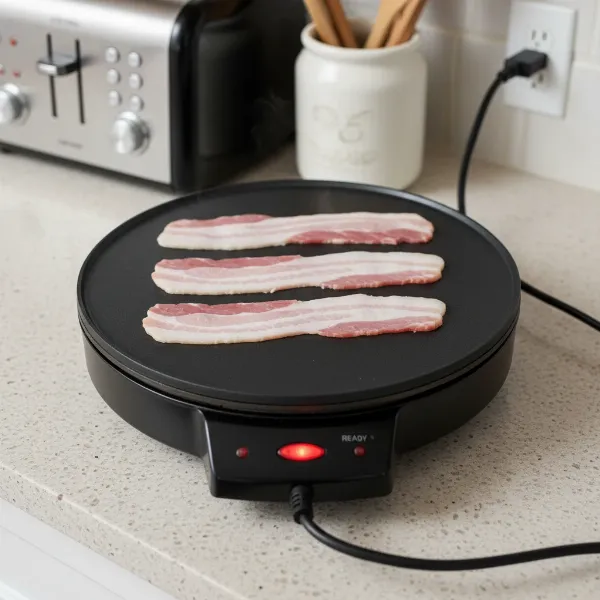 Raw bacon strips on a preheated crepe maker surface, ready for cooking
Step-by-Step Guide to Crispy Crepe Maker Bacon
Cooking bacon on a crepe maker requires a bit of patience and attention, but the results are well worth it.
- Arrange the Bacon: Once your crepe maker is preheated to a medium-low temperature, lay the bacon strips directly onto the cooking surface in a single layer. Avoid overcrowding the surface; this allows each strip to cook evenly and prevents steaming, which can lead to limp bacon. If you have a larger crepe maker, you can accommodate more strips, but always ensure there’s a little space around each piece.
- Slow Rendering: The key to crispy bacon is to render the fat slowly. Allow the bacon to cook undisturbed for a few minutes until you see the edges starting to crisp and the fat beginning to melt and pool around the strips.
- Flip and Turn: Using tongs, flip each strip of bacon regularly to ensure even cooking and browning on both sides. This frequent turning also helps the fat render more efficiently. Continue flipping until the bacon reaches your desired level of crispiness.
- Manage Excess Fat: As the bacon cooks, it will release a significant amount of fat. Since most crepe makers have low or no edges, this fat will accumulate on the surface. To prevent the bacon from becoming soggy or cooking unevenly, carefully drain off any excess fat into a heat-safe container (never down the drain). You can do this by tilting the crepe maker slightly or using paper towels to blot the fat. Removing the excess fat encourages crisping rather than frying in a deep pool of grease.
- Achieve Desired Crispness: Continue cooking and flipping, draining fat as needed, until the bacon is golden brown and as crispy as you like. Remember that bacon continues to crisp slightly after it’s removed from the heat.
- Batch Cooking: If cooking multiple batches, repeat the process. Remember to drain the excess fat between batches for optimal results and to prevent the crepe maker from getting too greasy.
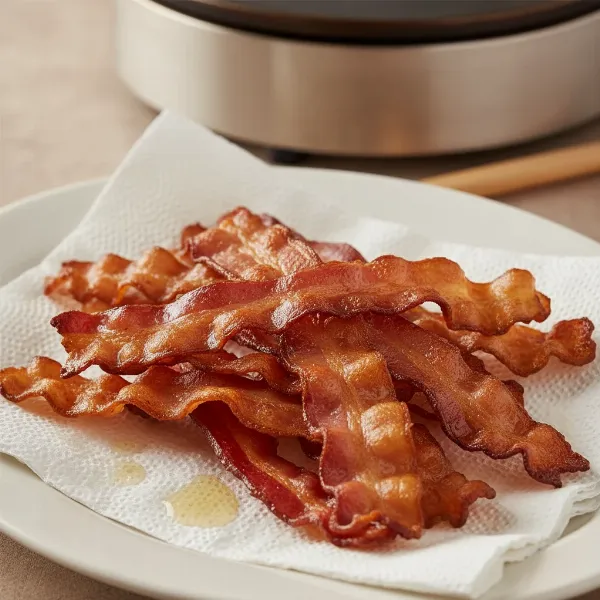 Golden-brown crispy bacon resting on paper towels after being cooked on a crepe maker
Tips for Perfect Crispy Bacon Every Time
Achieving consistently perfect crispy bacon on your crepe maker involves a few expert tips. Firstly, never overcrowd the cooking surface. Giving each strip ample space allows for proper air circulation and even fat rendering. Secondly, monitor your temperature diligently. A medium-low heat setting is usually ideal for a slow render, but adjust as needed based on your crepe maker’s performance and the thickness of your bacon. For instance, if the bacon is cooking too quickly or burning, lower the heat. If it’s not crisping up, slightly increase the heat. Lastly, always drain your bacon properly after cooking. Transfer the crispy strips to a plate lined with paper towels to absorb any residual grease, ensuring they stay crisp. Some enthusiasts even lightly season their bacon with a pinch of black pepper or a touch of brown sugar during the last few minutes of cooking for an added flavor dimension.
Cleaning Your Crepe Maker After Bacon
After enjoying your delicious crispy bacon, proper cleaning of your crepe maker is essential to maintain its non-stick surface and prolong its lifespan. It’s best to clean the appliance as soon as it has cooled down sufficiently to handle, but while it’s still warm, as residual fat and bits of bacon are easier to remove.
- Unplug and Cool: Always ensure the crepe maker is unplugged and has cooled down to a safe temperature before attempting to clean it.
- Remove Excess Grease: Using a paper towel or a soft cloth, carefully wipe away any visible grease and bacon bits from the cooking surface.
- Gentle Cleaning: If necessary, use a damp cloth or sponge with a mild dish soap to gently wipe the cooking surface. Avoid abrasive scrubbers, steel wool, or harsh chemical cleaners, as these can damage the non-stick coating.
- Rinse and Dry: Wipe the surface again with a clean, damp cloth to remove any soap residue. Then, dry the crepe maker thoroughly with a soft towel before storing. For models with removable plates, refer to your manufacturer’s instructions for specific cleaning guidelines, which may include dishwasher safety.
Conclusion
Who knew your humble crepe maker held the potential for perfectly crispy bacon? By understanding its even heat distribution and non-stick capabilities, and by mastering the art of slow rendering and fat management, you can unlock a surprisingly efficient method for preparing this breakfast favorite. This approach not only delivers consistently delicious results but also offers a smart way to utilize your kitchen appliances. So, the next time you’re craving that irresistible crunch, consider firing up your crepe maker. You might just discover your new favorite way to make bacon. What other unexpected uses have you found for your kitchen gadgets?
Frequently Asked Questions
Can all crepe makers be used to cook bacon?
|
Our Picks for the Best Crepe maker in 2026
As an Amazon Associate I earn from qualifying purchases.
|
||
| Num | Product | Action |
|---|---|---|
| 1 | Electric Crepe Maker 12'' & Griddle - Non-Stick Pan With Spreader for Roti, Tortilla, Blintzes, Pancakes - Adjustable Temperature, 1000W |

|
| 2 | Baker's Friend Instant Crepe Maker with Handle, Electric Crepe Maker Machine, Crepera Electrica, 8 Inch Non-stick Cooking Surface, Aqua |
|
| 3 | 16 Inch Commercial Crepe Maker, Dual-Head, Dual Zone Temp Setting, Nonstick Pancake Griddle Machine, 50-300°C(120-570℉), 3400W, S.S. Shell, for Catering, Restaurant, Snack Stand, CE Certified |
|
| 4 | Nutrichef Electric Crepe Maker & Griddle Cooktop - Nonstick 12 Inch Aluminum Hot Plate with LED Indicator Lights & Adjustable Temperature Control - Wooden Spatula & Batter Spreader Included |
|
| 5 | Nutrichef Electric Crepe Maker - 8-inch Nonstick Cooktop with On/Off Switch - Cooks Roti, Tortillas & Pancakes - Automatic Temperature Control & Cool Touch Handle - Includes Food Bowl, Whisk & Spatula |
|
| 6 | Moss & Stone 12” Electric Griddle Pan & Crepe Machine, Non-Stick Electric Crepe Maker with Adjustable Temperature, Includes Spreader & Spatula – Ideal for Pancakes, Blintzes & Tortillas |
|
| 7 | Moss & Stone Electric Crepe Maker 8 Inch, Portable Crepe Maker & Hot Plate Cooktop On/Off Switch, Nonstick Coating, Automatic Temperature Control, Easy To Use For Pancakes, Blintz, Chapati |
|
| 8 | Gourmia 12” Crepe Maker – Nonstick Electric Griddle for Pancakes, Omelets & More, Precise Temp Control with Indicator Lights, Includes Spatula & Batter Spreader, Quick Cleanup, Stainless Steel Trim |
|
| 9 | Moss & Stone Electric Crepe Maker – 8” Portable Crepe Pan Nonstick with Dipping Plate, Auto Shut-Off, On/Off Switch, Even Heating & One Automatic Temperature Control – Compact Crepe Maker |
|
| 10 | Gourmia 8” Electric Crepe Maker – Nonstick Ceramic Surface, One-Touch Operation, Includes Batter Tray, Compact & Easy to Clean, Crepe, Pancake & Tortilla Maker |
|
Most electric crepe makers with a flat, non-stick cooking surface can be used for bacon. However, crepe makers designed with very deep, concave surfaces for specific crepe styles might not be as effective for flat bacon strips.
How do I prevent bacon from splattering excessively on a crepe maker?
Since most crepe makers have low edges, splatter can be a concern. Cooking bacon on a medium-low heat setting helps reduce aggressive splattering. You can also place a splatter screen over the cooking surface or use a larger piece of aluminum foil as a makeshift barrier.
Is it necessary to oil the crepe maker before cooking bacon?
Typically, no. Bacon releases its own fat as it cooks, which lubricates the surface. However, a very light initial oiling might be useful for the first few strips, especially if your crepe maker’s non-stick coating isn’t brand new.
How do I ensure my bacon cooks evenly on a crepe maker?
The flat surface of a crepe maker is inherently good for even cooking. Ensure the maker is fully preheated, don’t overcrowd the surface, and flip the bacon strips frequently to promote uniform crisping.